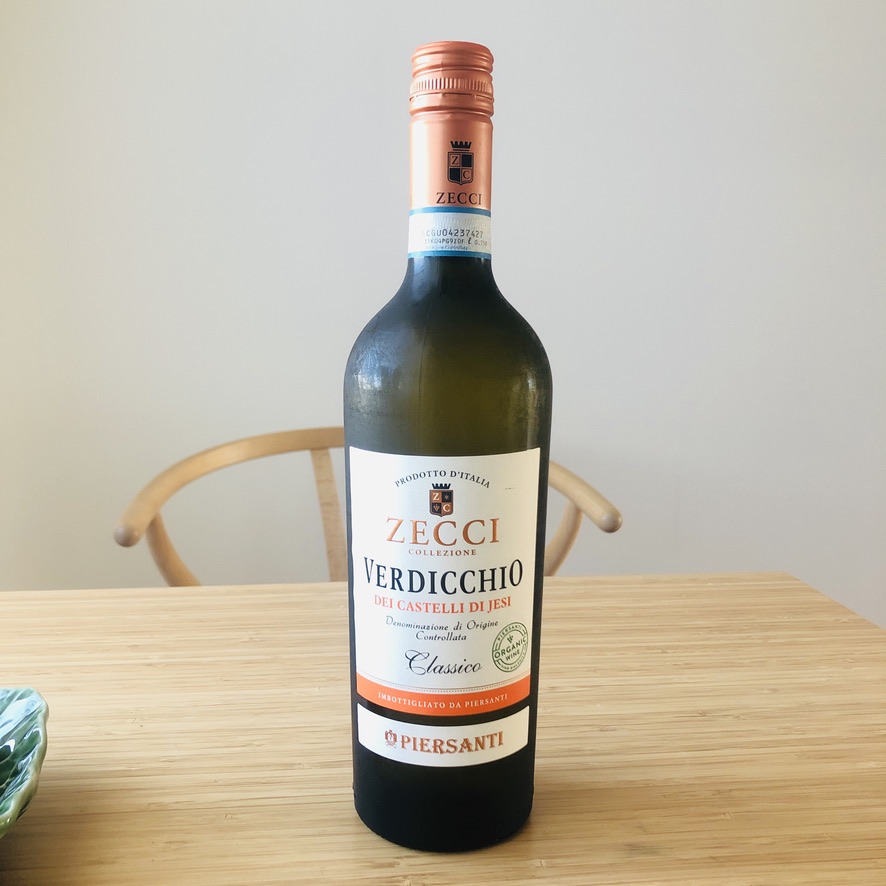
Zecci Verdicchio, 2020
- Country and region: Italy, Marche, Verdicchio dei Castelli di Jesi
- Producer: Piersanti
- Blend: Verdicchio
- Alcohol content: 13.5%
- Tasting notes: fruity, pear, honey, medium body
Explore more wines and grapes here.

Chianti
Is Vino Nobile di Montepulciano the same as Montepulciano?
The short answer is – no.
Here are a few things to know about Vino Nobile di Montepulciano:
- It is a DOCG
- Wines come from the vineyards outside of Montepulciano in Tuscany
- Style can be from full bodied to light, everyday wines
- NOT related to the Montepulciano grape or the Montepulciano d’Abruzzo wine
- DOCG requirement of minimum 70% Sangiovese however many producers use 100% Sangiovese in their wines
- Aging requirement of minimum 2 years and 3 for Riserva
Keep reading about wines here.
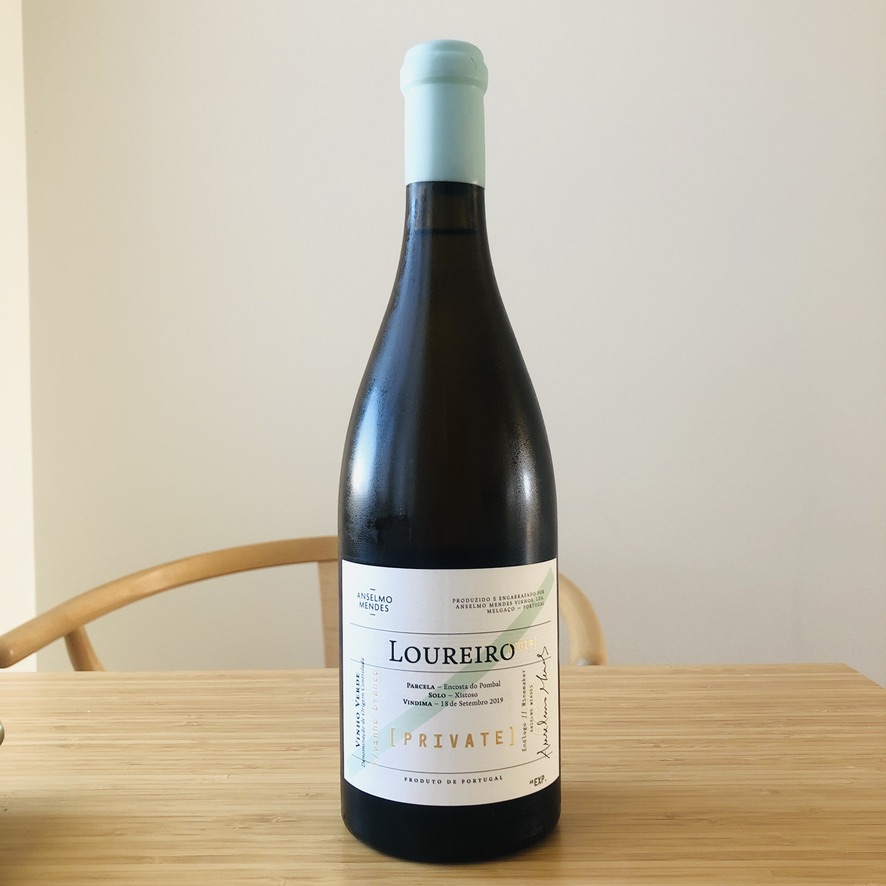
Loureiro, 2019
- Country and region: Portugal, Vinho Verde
- Producer: Anselmo Mendes
- Blend: Loureiro
- Alcohol content: 12%
- Tasting notes: apples, melon, minerals, fresh and crisp
Explore more wines and grapes here.

Malbec
Malbec is a grape that originated in France although it was Argentina who made it popular where it remains the most planted grape.
For a very long time, Malbec did not cross France’s border mainly because of its reputation for being very prone to rot and disease. The humid weather was not favorable for Malbec and many producers started planting only small amounts to avoid losing entire crops due to rot.
In France it is mostly grown in Cahors where the conditions are more favorable and is still used as one of the blending grapes allowed in the Bordeaux blend. Cahors is also the region which produces varietal Malbec wines in France.
Keep reading about wines here.
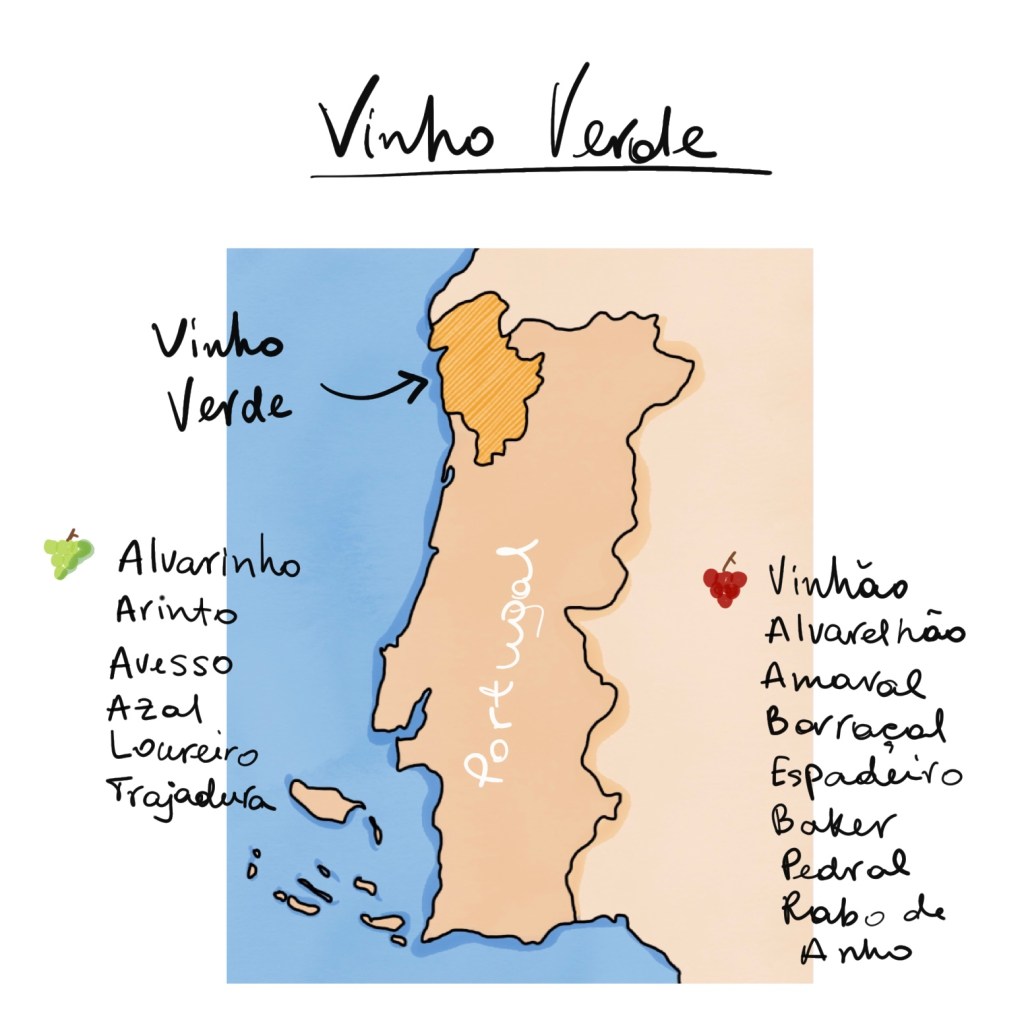
Vinho Verde
Vinho Verde wine is produced in the Vinho Verde region in Portugal. It is a blend of white grapes that are indigenous to the region. The main ones are: Alvarinho, Arinto, Avesso, Azal, Loureiro and Trajadura.
The wines were traditionally slightly sparkling which was a result of some residual fermentation that happened in the bottle. Today however, most sparkling Vinho verde wines are produced by artificially adding the carbon dioxide rather than having it naturally occur from fermentation.
Vinho verde wines can range in price and quality, a lot of them being cheap, everyday wines.
The good ones are usually varietal wines (especially from Alvarinho and Loureiro) and not sparkling. There are also red and rose styles of Vinho Verde which are pretty rare and hard to find but most likely great quality.
Keep reading about wines here.

The Mentors, 2015
- Country and region: South Africa, Western Cape, Coastal Region
- Producer: KWV
- Blend: Grenache
- Alcohol content: 14%
- Tasting notes: Raspberry, oak, chocolate, coffee, violet, spice, medium body, soft tannins
Read about Grenache here.
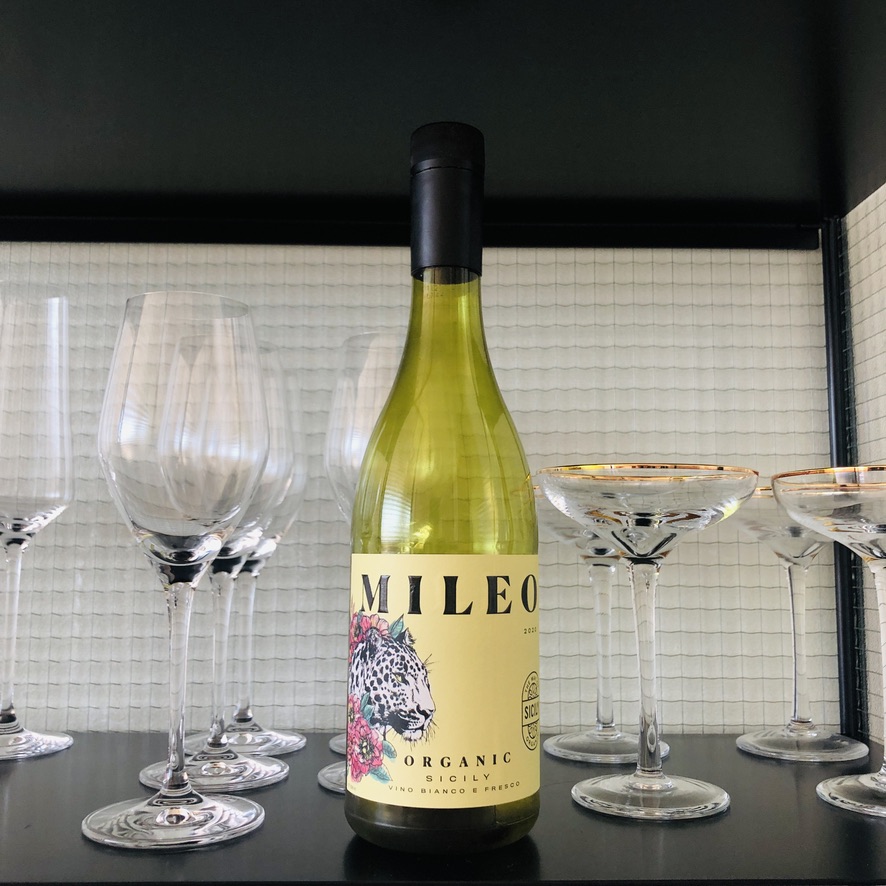
Mileo Bianco, 2020
- Country and region: Italy, Sicily
- Producer: Nosio
- Blend: Zibbibo and Grillo
- Alcohol content: 12%
- Tasting notes: Fruity and aromatic, notes of melon, peach, citrus.
Eiswein
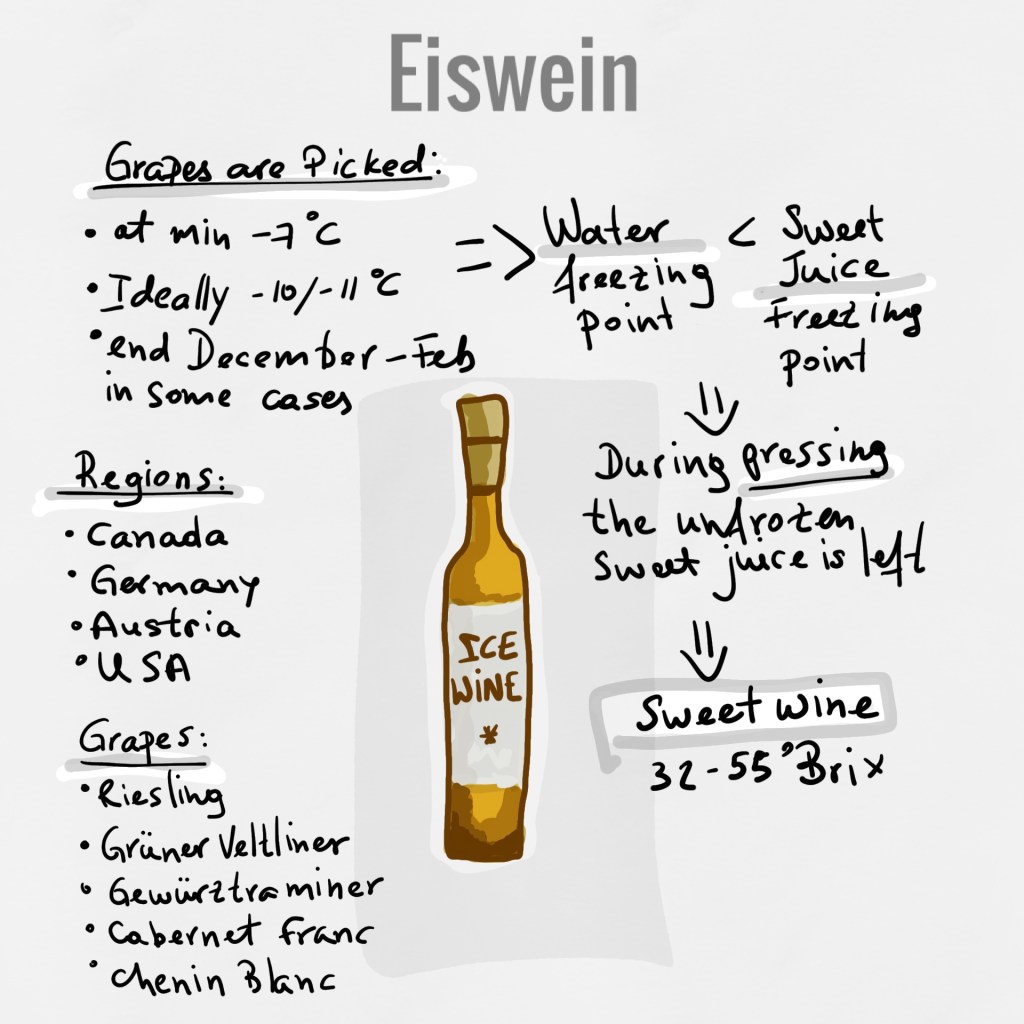
Or Ice wine – sweet sweet wine made from frozen grapes – yes indeed, grapes that are harvested around late December – even February in some cases.
Ice wine is produced from grapes that have frozen at a min of -7 C but ideally around -10/-11 C. They are picked and crushed frozen and because the water freezes faster than the sweet juice in the grape (note that this is what I mean in the above picture), what is left is a very sweet must of 32-55 Brix.
The regions that produce Ice wine are:
- Canada
- Germany – where it all started
- Austria
- USA
The grapes that love this kind of extreme cold weather are:
- Riesling
- Gruner Veltliner
- Gewürztraminer
- Cab Franc
- Chenin Blanc.
Keep reading about wines here.
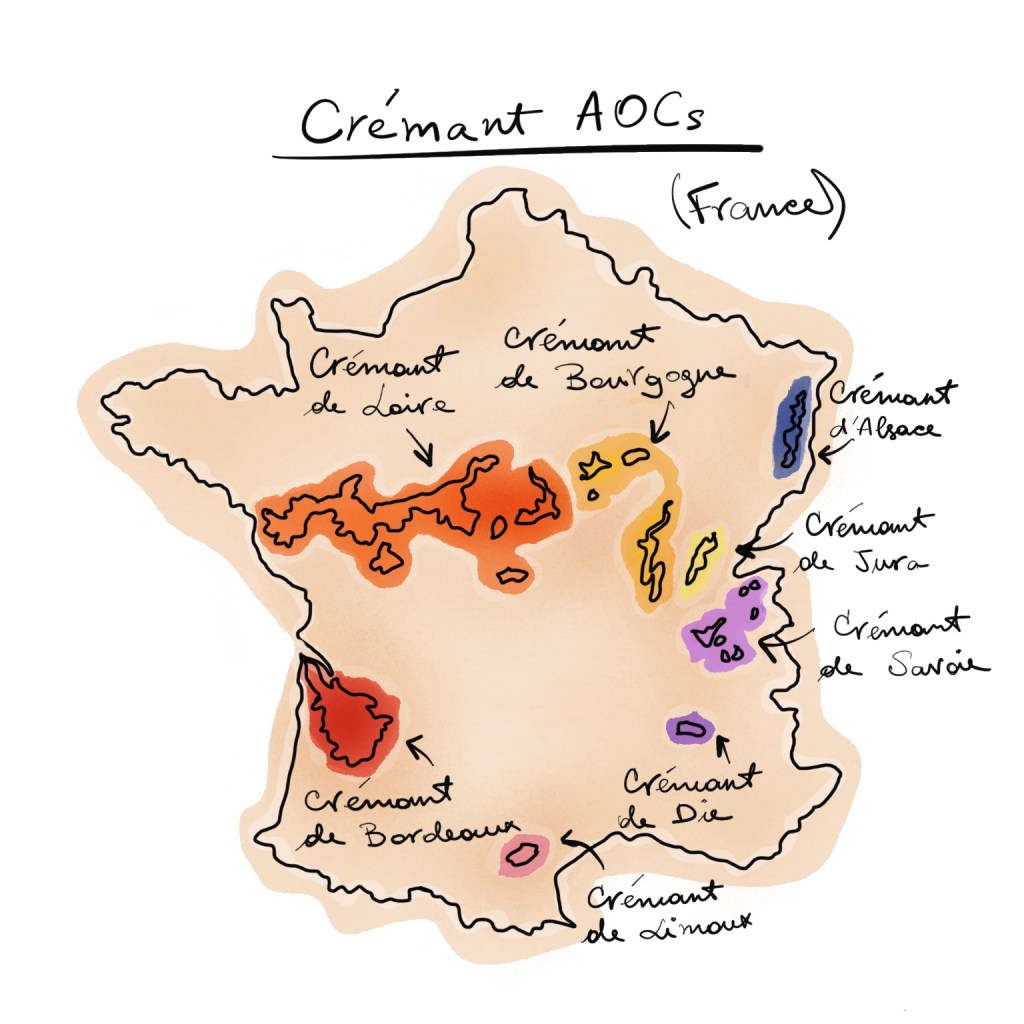
Crémant
Crémant – a good alternative to Champagne. Crémant is made with the traditional method in the same way as Champagne, though there are a couple of differences.
Differences between Crémant and Champagne:
- Region: Champagne is made exclusively in Champagne while Crémant in 8 other AOCs in France, 1 in Luxembourg and 1 in Belgium
- Blend: Crémant allows for a much wider range of grapes than the classic Champagne blend of Pinot Noir, Chardonnay and Pinot Meunier. Each AOC has its own rules regarding the blend, Alsace for example can also produce Crémant from only 1 grape variety. Each AOC has its own rules regarding the blend, Alsace for example can also produce Crémant from only 1 grape variety.
- Effervescence/ atmospheric pressure: Champagne usually has between 5 to 6 bars of atmospheric pressure while Crémant is “creamier” with around 4 bars of atmospheric pressure
- Price: a good bottle of Crémant is definitely cheaper than a good bottle of Champagne
Keep reading about Crémant here.
Riesling – How to read a the label!
There are many clues on a Riesling wine label, things that can indicate the quality, grape ripeness, dryness/sweetness levels etc.
An example is the very simple label of a Sybille Kuntz bottle – seemingly very minimal, but holding a lot of valuable information.

Riesling – Grape Ripeness
When talking about Riesling, there are a few things we can look at: sugar levels, quality classifications and grape ripeness.
Riesling can be classified as Landwein, Qualitatswein, Pradikatswein, VDP.
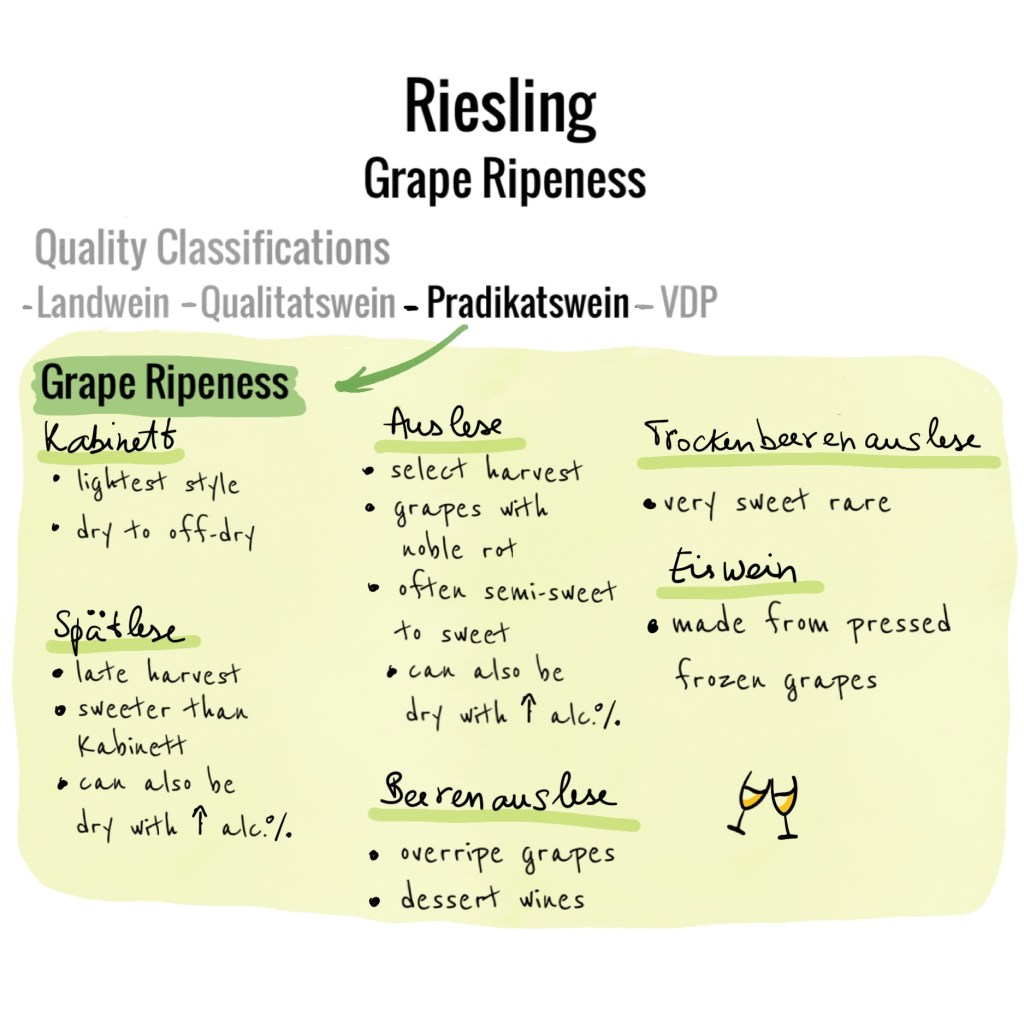
We will focus on what these entail in a different post, however when it comes to Pradikatswein, this classification is then split into another classification which is based on grape ripeness – how ripe the grapes were when they were picked, meaning initial sugar levels of the grape, not the final residual sugar that a bottle of Riesling has.
Based on the grape ripeness, Rieslings can be:
- Kabinett
- Spatlese
- Auslese
- Beerenauslese
- Trockenbeerenauslese
Riesling – Regions
Riesling is a grape that has its origins in Germany but throughout the years has spread to many countries like USA, France, Austria, Australia, New Zealand, Moldova and many other.

The largest producer still remains Germany (around 24 ha vs 5 ha in USA) in regions like Pfalz, Mosel, Rheinhessen.
As a grape, Riesling is very expressive of its terroir, meaning that it will produce a different wine depending on the climate and soil it is grown.
Depending on the climate, Riesling wines will tend to exhibit some of the below characteristics:
- Cool climates: like Germany, high in acidity, notes of green apple, peach, fresh herbs
- Intermediate climates: high in acidity, notes of red apple, peach, quince, honey, spice
- Warm climates: high acidity, notes of pineapple, mango, apricot, honey
- Ice wine (to come in a different post): sweet, candied lemon, pineapple, apricot
New Zealand
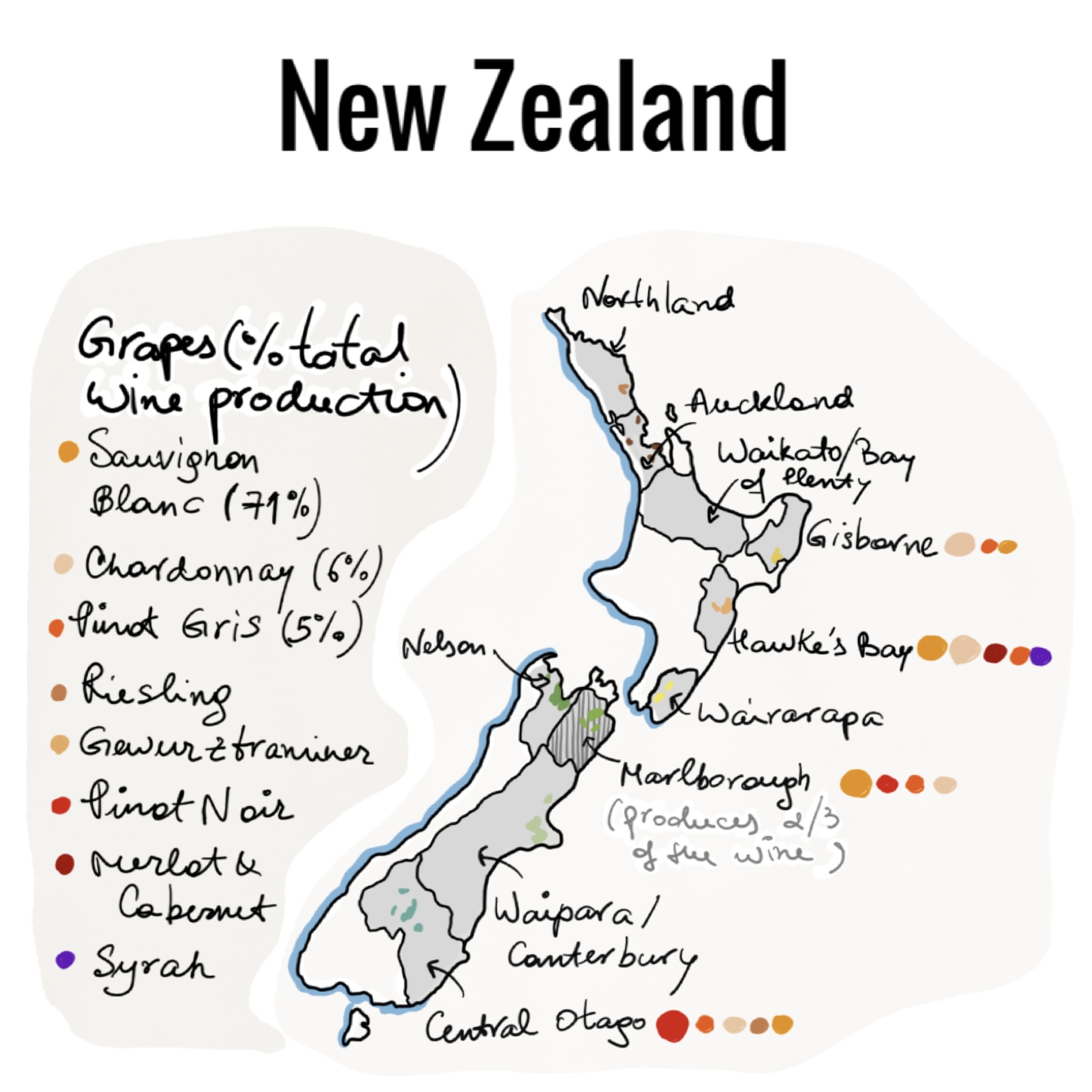
Wines from NZ though relatively new to the international market (1980s), actually have a much longer history with the first vines dating back to the 1840s.
With its maritime climate and one of a kind terroir, NZ is a great place for grapes like Sauvignon Blanc (Marlborough – main region) which is the hero grape of NZ, accounting for 71% of all wines. The resulting wines are full of aroma, passionfruit and tropical fruit notes. When it comes to red wine, NZ is known for its Pinot Noirs which is grown in cooler regions such as Wairarapa, Marlborough, Nelson etc and produces styles of Pinot Noir that are richer and more intense.
10 main regions:
- Marlborough – largest wine production region, 2/3 of all wine
- Subregions: Southern Valleys, Wairau Valley, Awatere Valley
- Hawke’s Bay
- Subregions: Coastal Areas, Hillsides, Alluvial Plains, River Valleys, Central Hawke’s Bay
- Central Otago
- Subregions: Gibbston, Bannockburn, Cromwell, Lowburn and Pisa, Bendigo, Wanaka, Alexandra
- Gisborne
- Subregions: Ormond, Patutahi, Manutuke
- North Canterbury
- Subregions: Waipara Valley, Canterbury Plains
- Wairarapa
- Subregions: Masterton, Gladstone, Martinborough
- Nelson
- Subregions: Moutere Hills, Waimea Plains
- Auckland
- Subregions: Waiheke Island, West Auckland, Matakana
- Northland
- Waitaki Valley
European Wine Certifications
You have probably seen acronyms like AOC, DOC/DOCG on many wine labels, but what is that based on and what do they mean?
The European Union classifies wine based on terroir – geographical region, climate etc plus certain quality standards like yield, abv%, grapes allowed and so on.

These certifications are meant to ensure that the wine is indeed from the region mentioned on the label however and that it has a minimum level of quality dictated by the rules of each country’s PDO/PGI. It does not, however guarantee quality as it is not looking for example at vintage and some wine production practices.
The 2 EU wine certifications are: PDO and PGI
Anything that falls outside these classifications is ‘table wine’.
“- Protected Designation of Origin – PDO: covers agricultural products and foodstuffs which are produced, processed and prepared in a given geographical area using recognized know-how.
– Protected Geographical Indication – PGI: covers agricultural products and foodstuffs closely linked to the geographical area. At least one of the stages of production, processing or preparation takes place in the area.” (winequality.eu)
Today each EU country has their own categories that correspond to PDO/PGI:
PDO:
- France: AOC – Appellation d’Origine Contrôlée
- Italy: DOC – Denominazione di Origine Controllata; DOCG – Denominazione di Origine Controllata e Garantita
- Germany: QbA – Qualitätswein bestimmter Anbaugebiete; Prädikatswein
- Portugal: IPR – Indicação de Proveniência Regulamentada; DOC – Denominacão de Origem Controlada
- Spain: DO – Denominación de Origen); DOCa – Denominación de Origen Calificada
PGI:
- France: IGP – Indication géographique protégée
- Italy: IGT – Indicazione Geografica Tipica
- Germany: Landwein
- Portugal: VR – Vinho Regional
- Spain: VT – Vino de la Tierra

Cava DO Zones
Although most Cava producers (95%) are located in Catalonia, Cava D.O. is officially split into 4 zones with wineries all over Spain from Rioja, Aragon, Navarra to Extremadura.
This new classification by zone comes after years of producers asking the Cava DO Regulatory Board to distinguishing between different geographical regions which have different terroir and climate. With the latest classification, this is possible as winemakers can choose to add the specific zone on the bottle, this way for example producers outside of Catalonia can indicate which zone the wine is from.
Corpinnat
There have been many debates among the Cava producers along the years surrounding the quality of not just the wines but the entire production between large and small scale producers.
In 2017 the Cava DO Regulatory Board added a new Cava classification called Cava Paraje Calificado (CPC) which focuses mainly on the quality of the individual wines but not necessarily on the entire production process.
Following years of disagreement around this subject, before CPC was even introduced, 9 wine producers from Penedès decided to break away from the Cava DO and create their own wine association called Corpinnat.
Keep reading about Cava here.

Cava
Cava is originally from Penedes in Catalonia where the first bottle was produced in 1872. Made in the same way as Champagne (i.e the traditional method), Cava is classified mainly based on aging as Cava, Reserva, Gran Reserva and Cava de Paraje Calificado.
The classic Cava blend is Macabeo, Xarel-lo and Parellada though today there a few other grapes that are allowed to be added in Cava and Cava Rose. Xarel-lo together with Macabeo are the grapes that are mainly associated with Cava and are the most widely planted in Cava DO.
Xarel-lo is naturally high in resveratrol which allows the wine to age without any added sugar (dosage) and is the grape that ads body to the wine.
Keep reading about Cava here.
 My cup of wine