– scroll for detailed Instagram post –
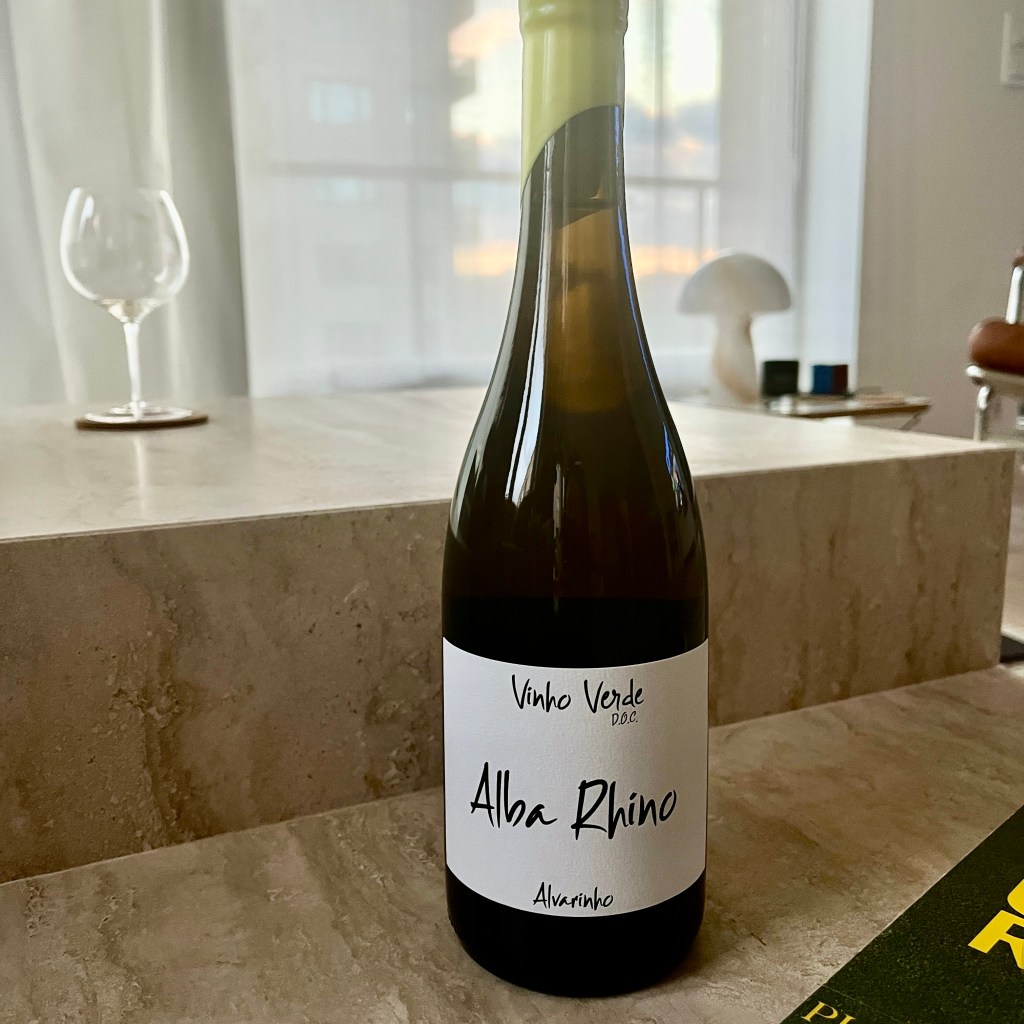
Alba Rhino
Vinho Verde, 2023
- Country: Portugal, Vinho Verde
- Producer: Quinta das Arcas
- Blend: Alvarinho
- Alcohol content: 13.5%
- Tasting notes: yellow pear, apricot, mineral, lemon, fruity, fresh.
Keep reading about wines here.
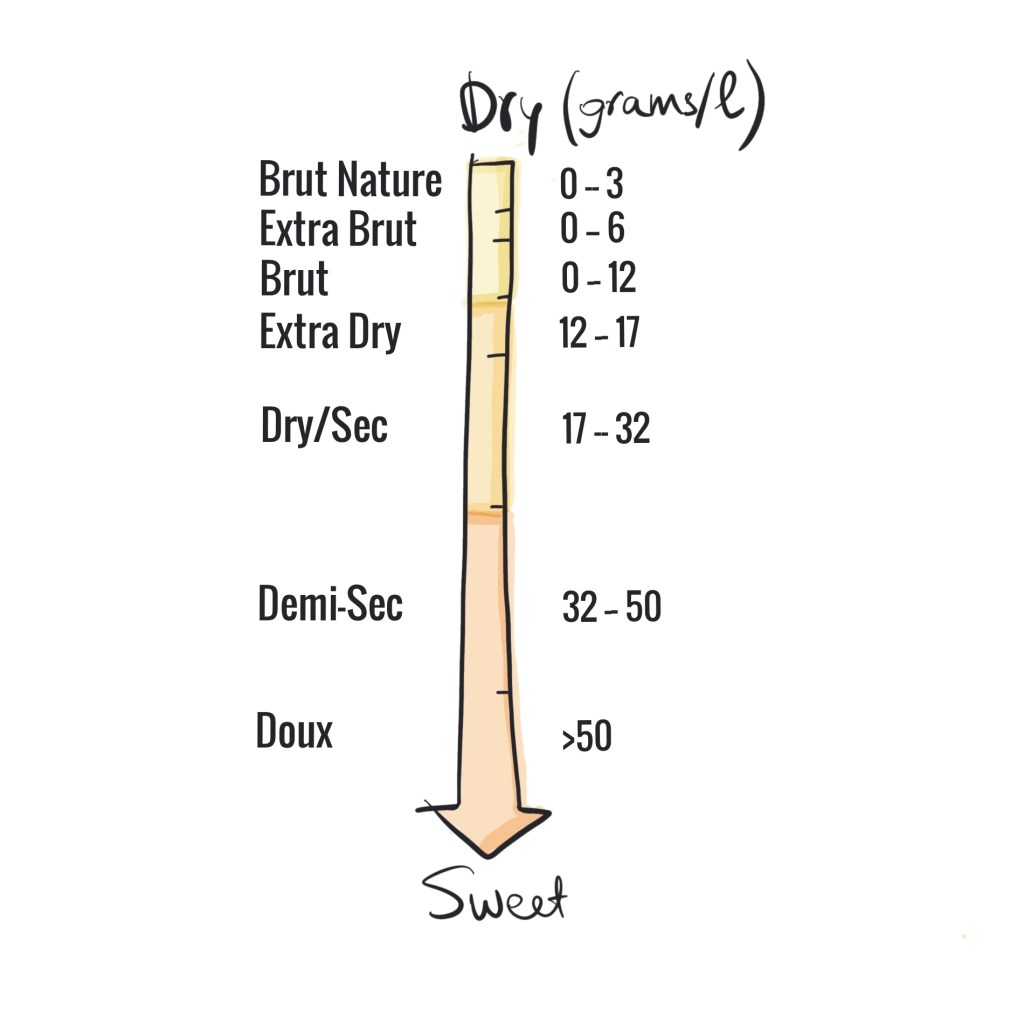
Sugar Levels
Sparkling wines can be classified based on the level of sugar they have. The sugar levels are regulated by adding a liquid which is a mix of sugar and wine in the bottle before it is sealed. This is called dosage and this is how the sugar levels are brought to the desired level.
Brut Nature
- Called “zero dosage” or no sugar added
- Pairing: savory dishes, starters, fish and white meat, lobster
Extra Brut
- Dry and sour
- Pairing: lobster, chicken
Brut
- Dry, a bit sour and fruity
- Pairing: Truffle, fried potatoes, citrus, sushi
- Most champagnes and other sparkling wines are brut
Extra Dry
- Not as dry, slightly sweet, fruity, aromatic
- Pairing: extra dry Prosecco goes with pastries, cakes, macaroons, sweet things
Dry / Sec
- Light sweet levels
Demi Sec
- Pairing: sweet, spicy food, used in cocktails, fruit, crème brulée, popcorn, octopus, chocolate desert
Keep reading about wine here.
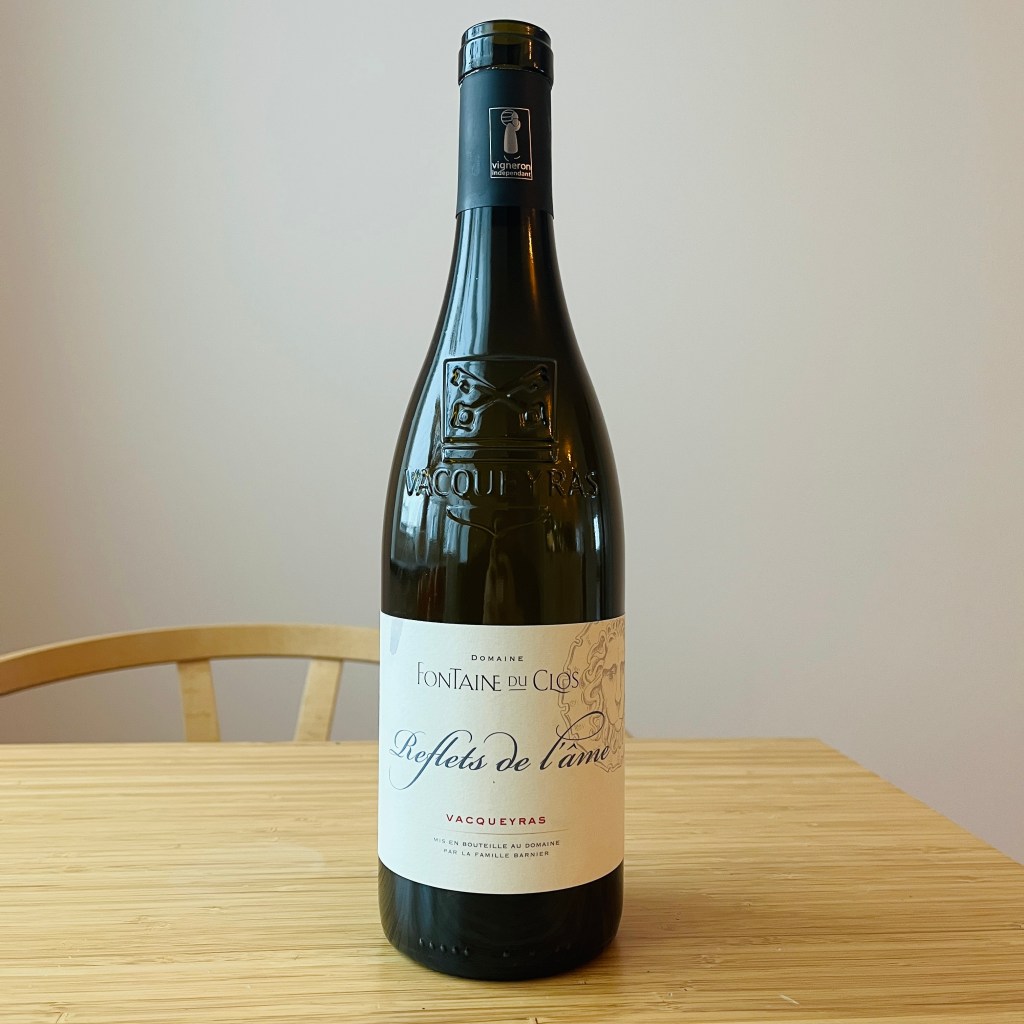
Reflets de l’Âme
Vacqueyras, 2021
- Country: France, Vacqueyras, Rhône Valley
- Producer: Domaine Fontaine Du Clos
- Blend: 70% Grenache, 15% Syrah, 15% Mourvèdre.
- Alcohol content: 14%
- Tasting notes: blackberry, black pepper, plum, raspberry.
Keep reading about wines here.
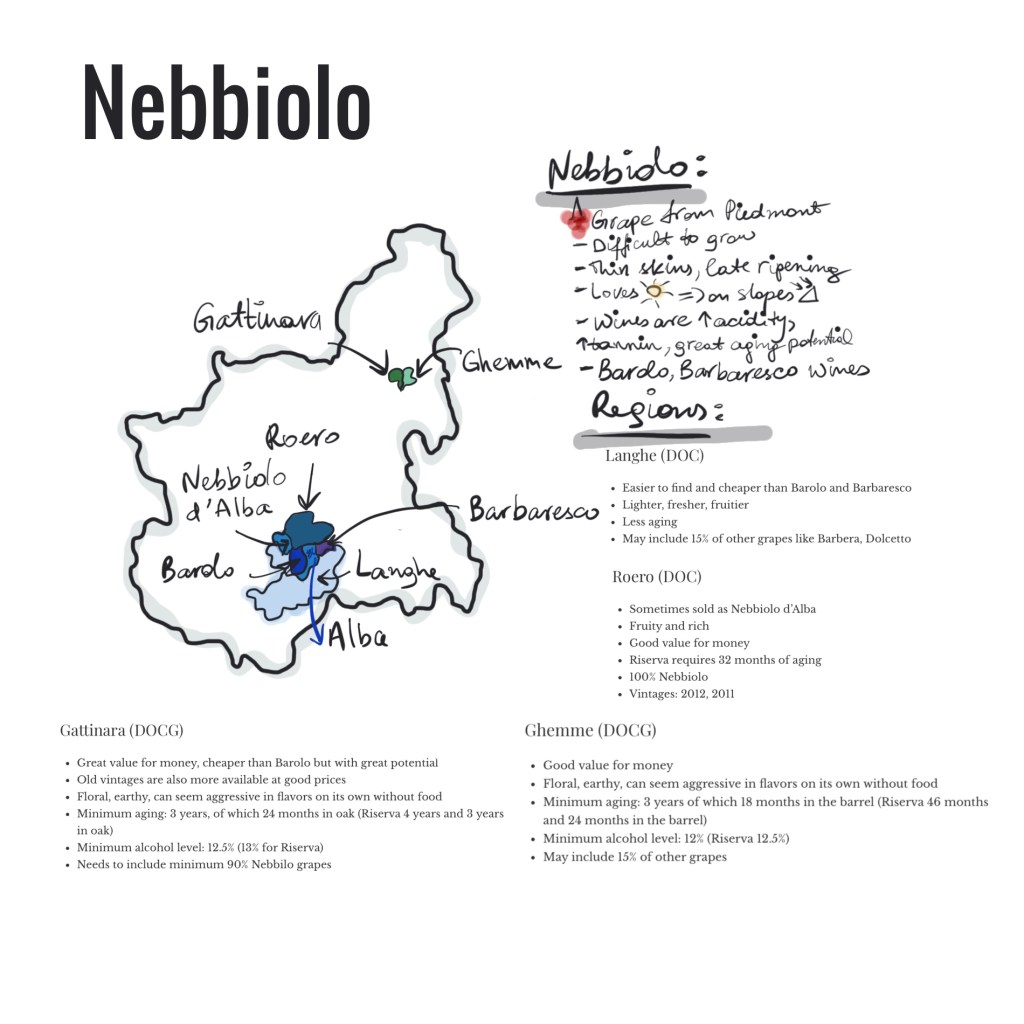
Nebbiolo is a grape from Piedmont in Northern Italy which is difficult to grow as it has thin skins and is late ripening. Nebbiolo loves sunlight which is why it is planted on slopes so it gets enough sun which helps it develop higher sugar levels. Without enough sun and warmth, there is a risk for the grape remaining too acidic and unripe.
Nebbiolo produces wines that are high in acidity and tannin which are both qualities that give it great aging potential. The wine usually has a brick-like color and is translucent.
Keep reading about wine here.
Langhe (DOC)
- Easier to find and cheaper than Barolo and Barbaresco
- Lighter, fresher, fruitier
- Less aging
- May include 15% of other grapes like Barbera, Dolcetto
Roero (DOC)
- Sometimes sold as Nebbiolo d’Alba
- Fruity and rich
- Good value for money
- Riserva requires 32 months of aging
- 100% Nebbiolo
- Vintages: 2012, 2011
Gattinara (DOCG)
- Great value for money, cheaper than Barolo but with great potential
- Old vintages are also more available at good prices
- Floral, earthy, can seem aggressive in flavors on its own without food
- Minimum aging: 3 years, of which 24 months in oak (Riserva 4 years and 3 years in oak)
- Minimum alcohol level: 12.5% (13% for Riserva)
- Needs to include minimum 90% Nebbilo grapes
Ghemme (DOCG)
- Good value for money
- Floral, earthy, can seem aggressive in flavors on its own without food
- Minimum aging: 3 years of which 18 months in the barrel (Riserva 46 months and 24 months in the barrel)
- Minimum alcohol level: 12% (Riserva 12.5%)
- May include 15% of other grapes
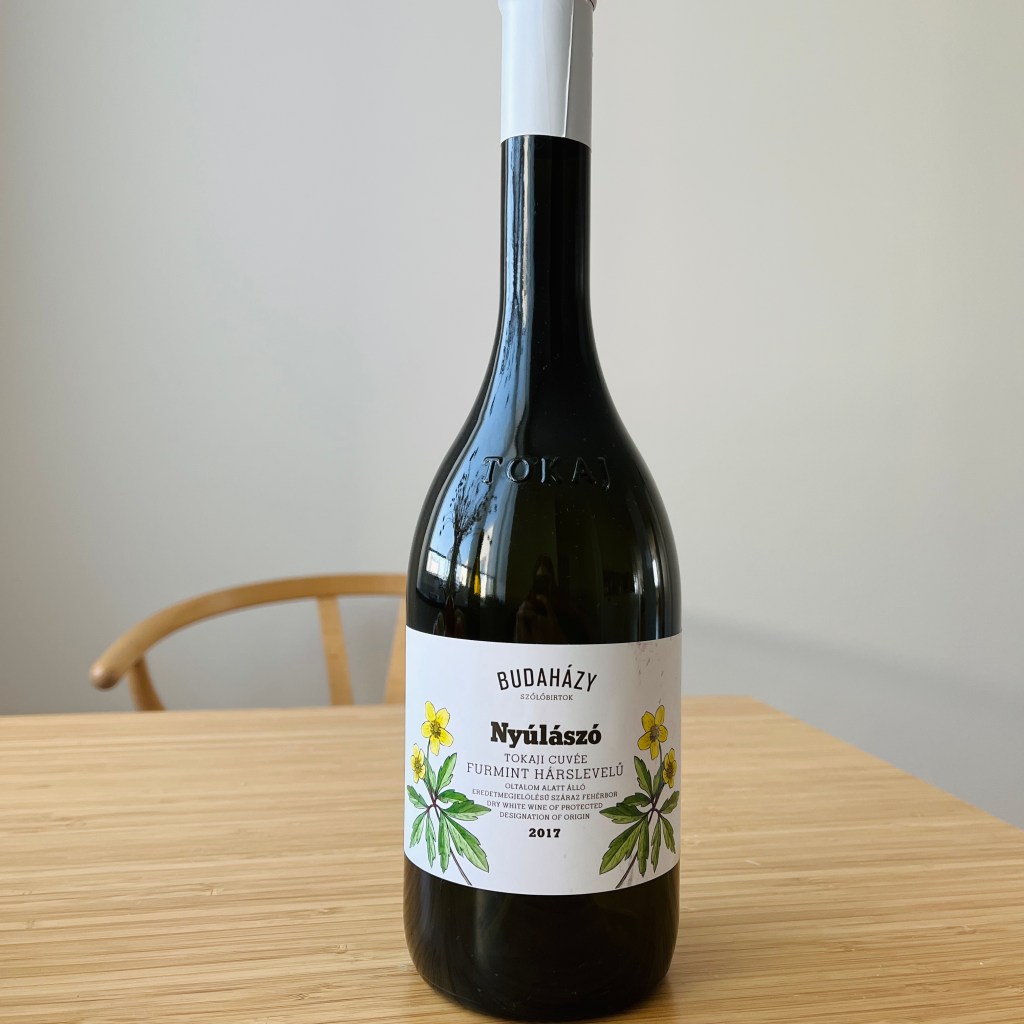
Budaházy Nyúlászó
Tokaji, 2017
- Country: Hungary, Tokaj
- Producer: Budaházy
- Blend: Furmint, Hárslevelü.
- Alcohol content: 13.5%
- Tasting notes: citrus, honey, well balanced, elegant.
Keep reading about wines here.
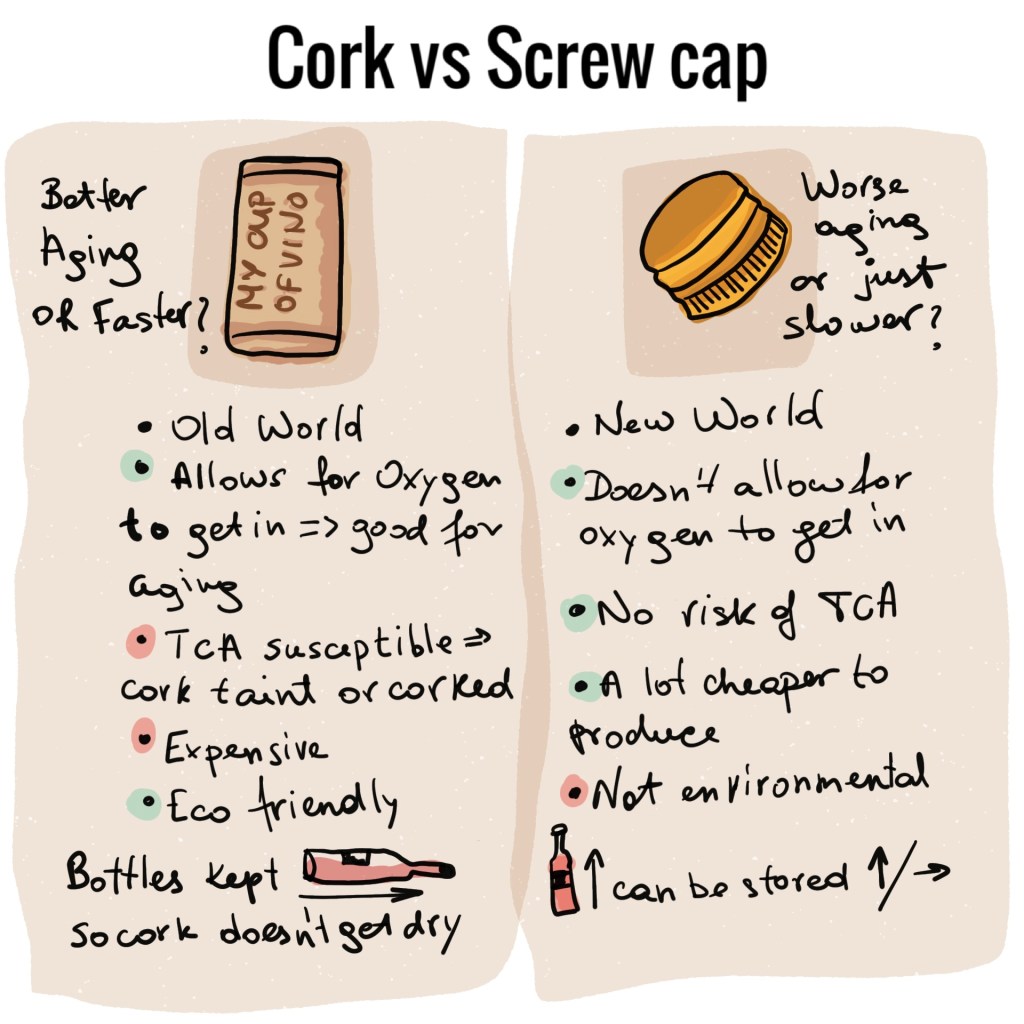
Corks vs screw caps
Corks vs screw caps, who wins? It’s hard to say, there are pros and cons to both of them.
Corks are very Old world and let’s face it we’ve all raised an eyebrow at some point at the sight of a bottle of red with a screw cap. Having said that, quality wise – a cork does not necessarily mean better wine.
There are a lot of great quality wines with a screw cap, this is very common in the New world (New Zealand, Australia).
Keep reading about wine here.
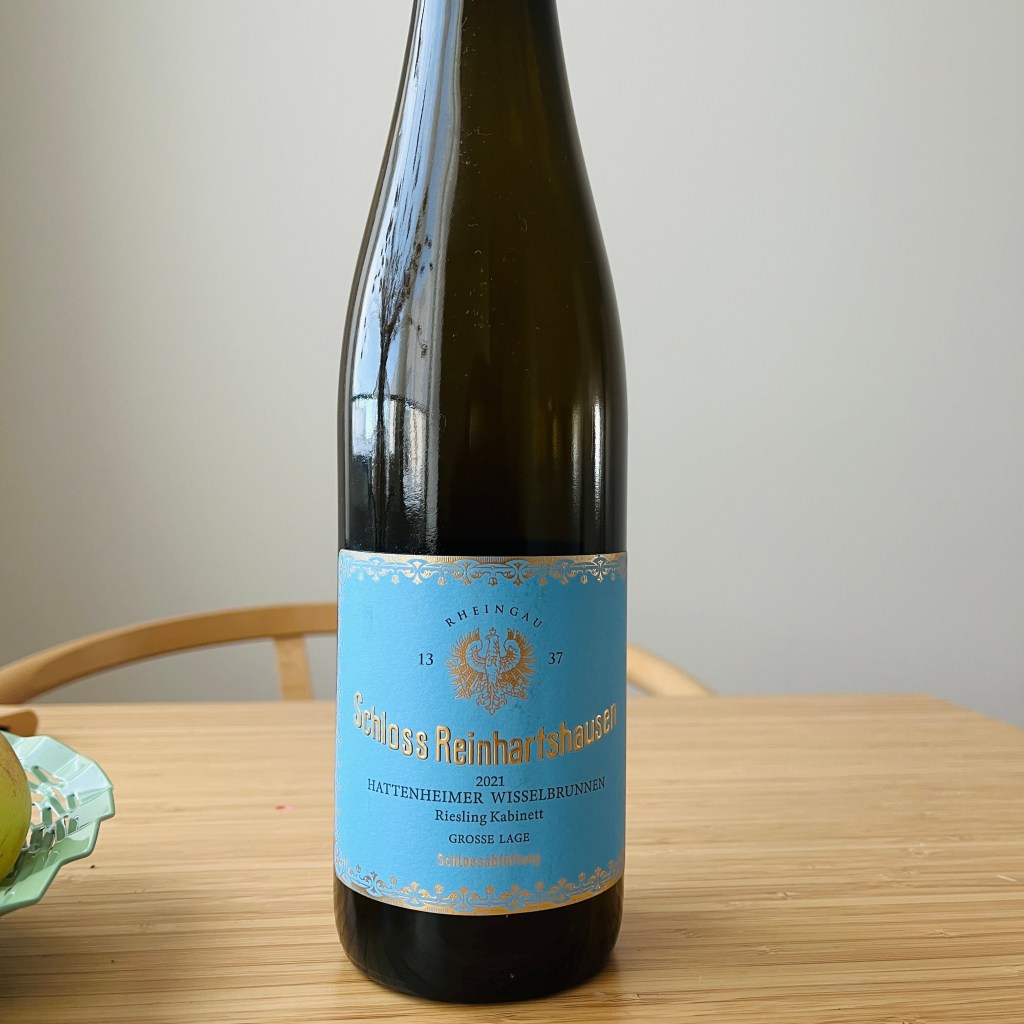
Schloss Reinhartshausen
Riesling Kabinett, 2021
- Country: Germany, Rheingau
- Producer: Schloss Reinhartshausen
- Blend: Riesling
- Alcohol content: 11.5%
- Tasting notes: fruity, fresh, pineapple, pear, minerals, very light.
Keep reading about wines here.

Tokaji Wine
Tokaj or Tokaji?
Tokaj is a region in Hungary bordering to Slovakia. Tokaji is the wine produced in this region.
Though Tokaji wines can also be dry, they are mainly known for their very complex sweet wines called Tokaji Aszú.
Grapes
There are 6 main white grapes that are allowed in Tokaj. The main one is Furmint which is late ripening, high in acidity and can produce wines with a high alcohol content.
The second most important grape is Hárslevelű which
like Furmint, is also late ripening and high in acidity. It can be used both in blends but also varietal wines.
Both grapes are very susceptible to botrytis which is key to the production of Tokaji Aszú.
Wine Styles
Tokaji wines are a perfect expression of terroir and complexity. They come in a few styles:
- Aszú – sweet
- Szamorodni – sweet or dry
- Fordítás – sweet
- Eszencia – sweet
Keep reading about wine here.
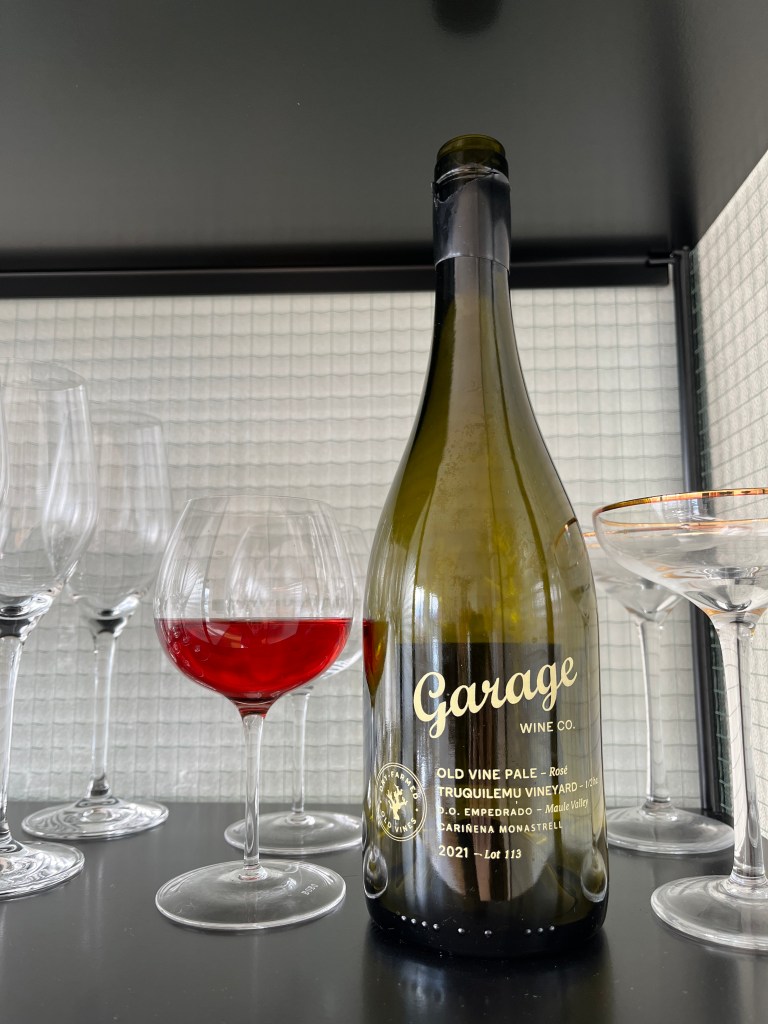
Fiano
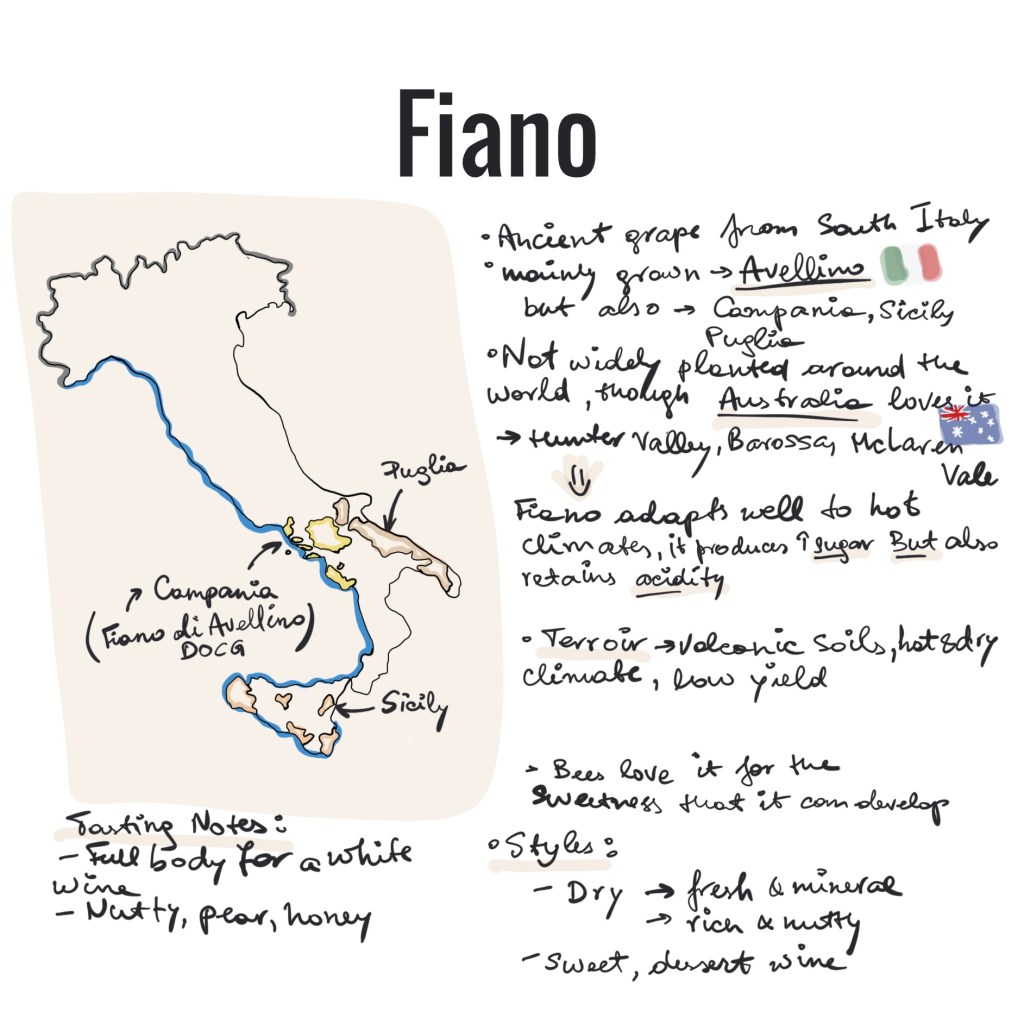
Fiano is an ancient grape that most likely comes from South of Italy, Campania.
Today it is primarily grown in Avellino but also overall Campania, Sicily and Puglia. Outside of Italy, it’s not widely planted with Australia being the main country that champions it.
Fiano adapts well to hot climates, it is a low yielding grape that produces wines that are high in sugar but that also retain acidity which is why it’s perfect for a climate like Australia.
- Terroir
- volcanic soils
- hot and dry climates
- Styles
- dry – fresh and mineral or nutty and rich
- sweet, dessert wine
- Tasting notes
- full body for a white wine
- nutty, pear notes, honey
Keep reading about wine here.
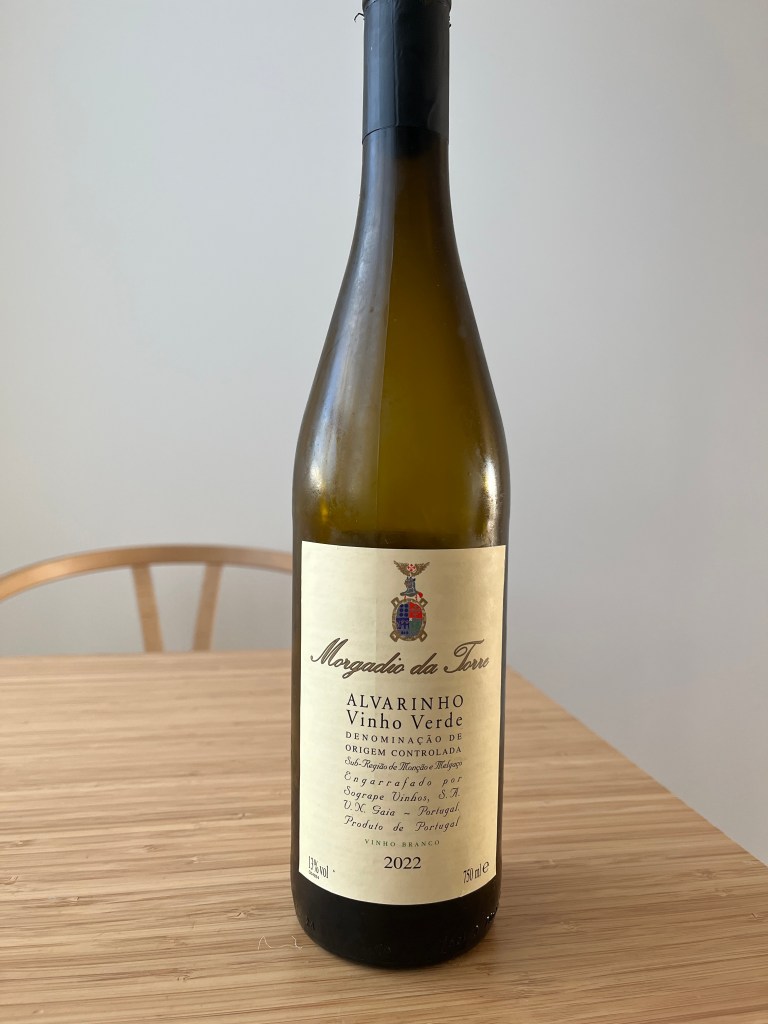
Morgadio da Torre Alvarinho
2022
- Country: Portugal, Vinho Verde
- Producer: Sogrape
- Blend: Alvarinho
- Alcohol content: 13%
- Tasting notes: fruity, fresh, apple, citrus, minerals, acidic.
Keep reading about wines here.
Moldova
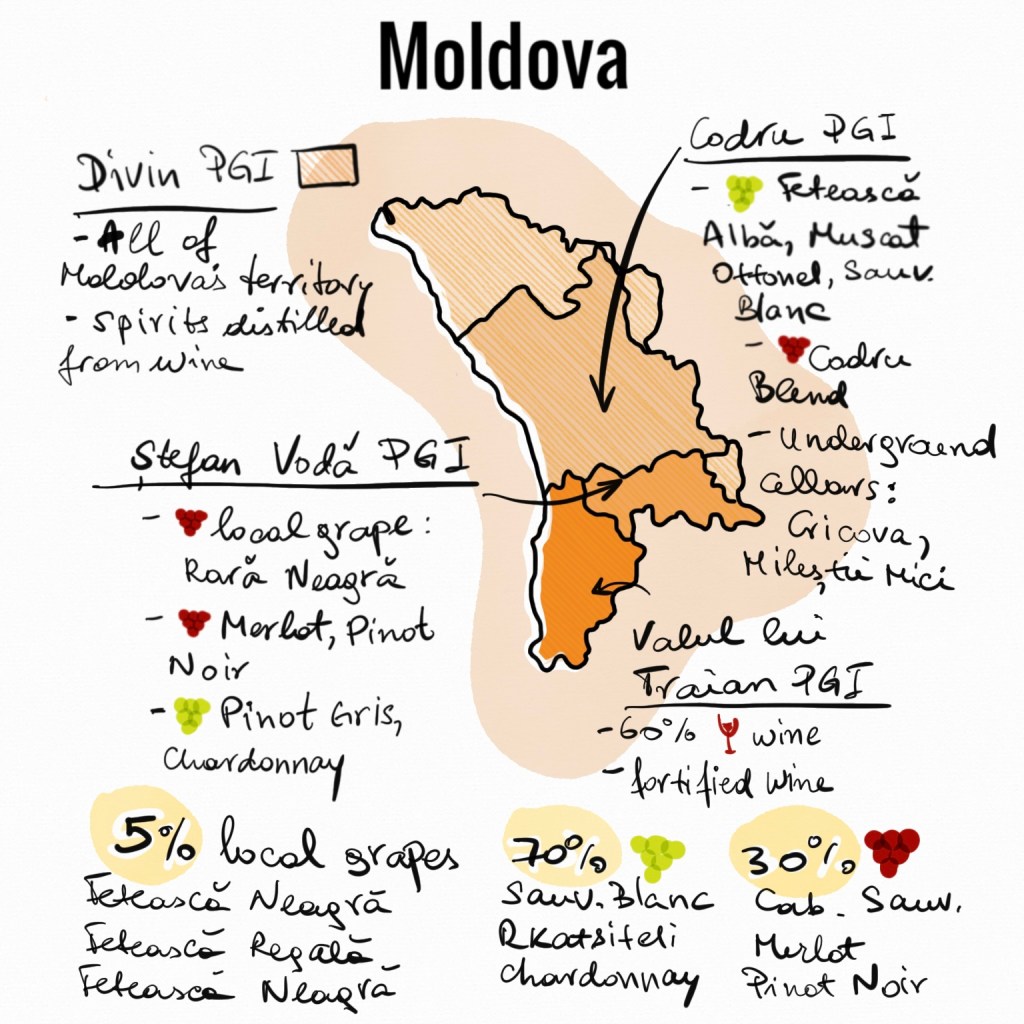
Moldova has a very long history of winemaking (3000 BC) and has the highest density of vineyards in the world.
It grows both international varieties like Cabernet Sauvignon, Merlot, Pinot Noir, Sauvignon Blanc as well as some indigenous grapes like Feteasca Rara, Feteasca Neagra, Feteasca Alba, Feteasca Regala.
There are 2 famous underground cellars in Moldova – Cricova and Milestii Mici. Milestii Mici holds the Guinness world record for the largest wine collection in the world.
Moldova is divided into 4 PGIs:
- Value lui Traian
- 60% of the wines produced here are red
- Sweet fortified wines
- Region with the driest and warmest climate in Moldova
- Stefan Voda
- Indigenous grape – Rară neagră
- The famous Negru de Purcari is produced here
- Grape varieties: Merlot, Fetească Neagră, Saperavi, Pinot Noir, Chardonnay, Pinot Gris
- Codru
- Region with the coolest climate
- White grapes are mainly grown here: Feteasca negara, Muscat Ottonel, Sauvignon Blanc, Chardonnay
- Sparkling wines are produced here as well
- Red varieties: Codru blend
- The famous underground cellars are located here: Cricova and Milestii Mici
- Divin
- Covers all of Moldova
- Produces spirits distilled from wine
Keep reading about wine here.
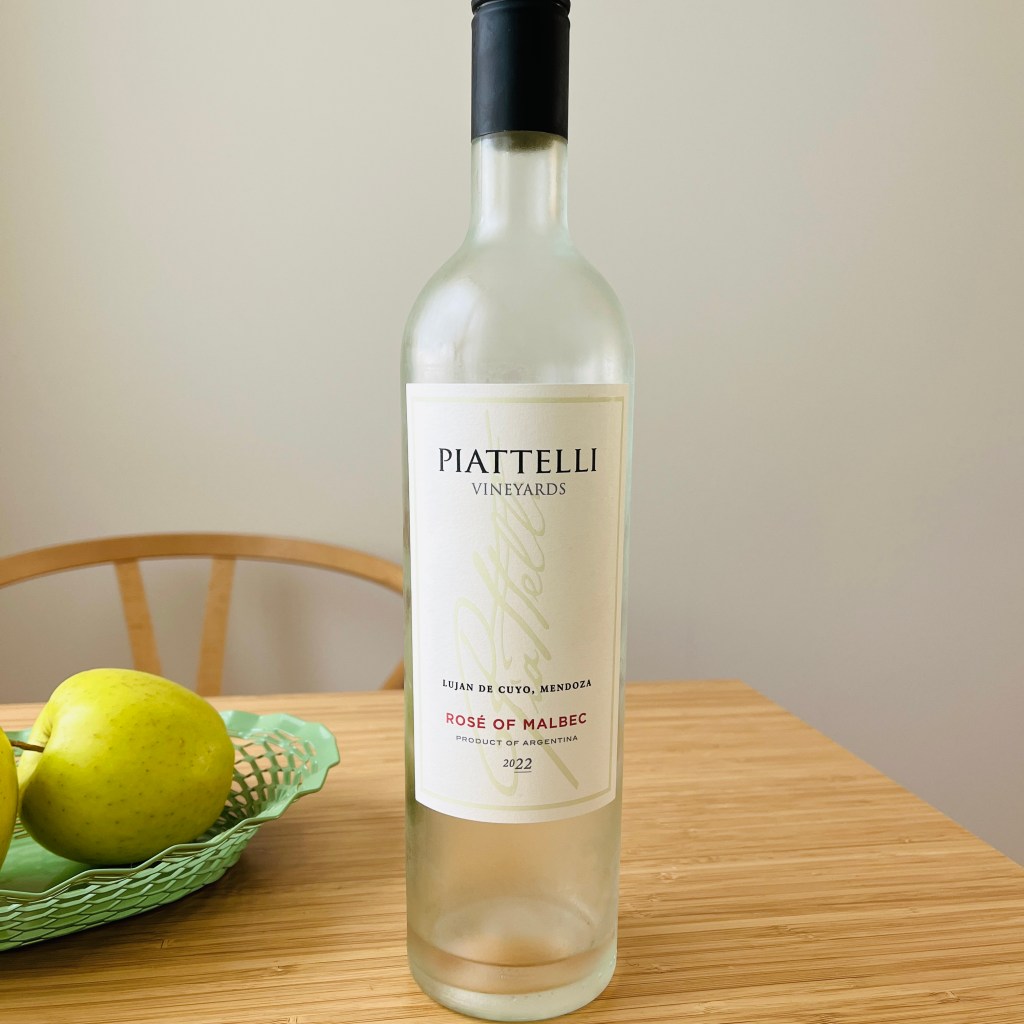
Piattelli Malbec Rosé
2022
- Country: Argentina, Cuyo, Mendoza
- Producer: Piattelli
- Blend: Pinot Noir
- Alcohol content: 14%
- Tasting notes: fruity, red fruit, herbs, peach, fuller in body.
Keep reading about wines here.
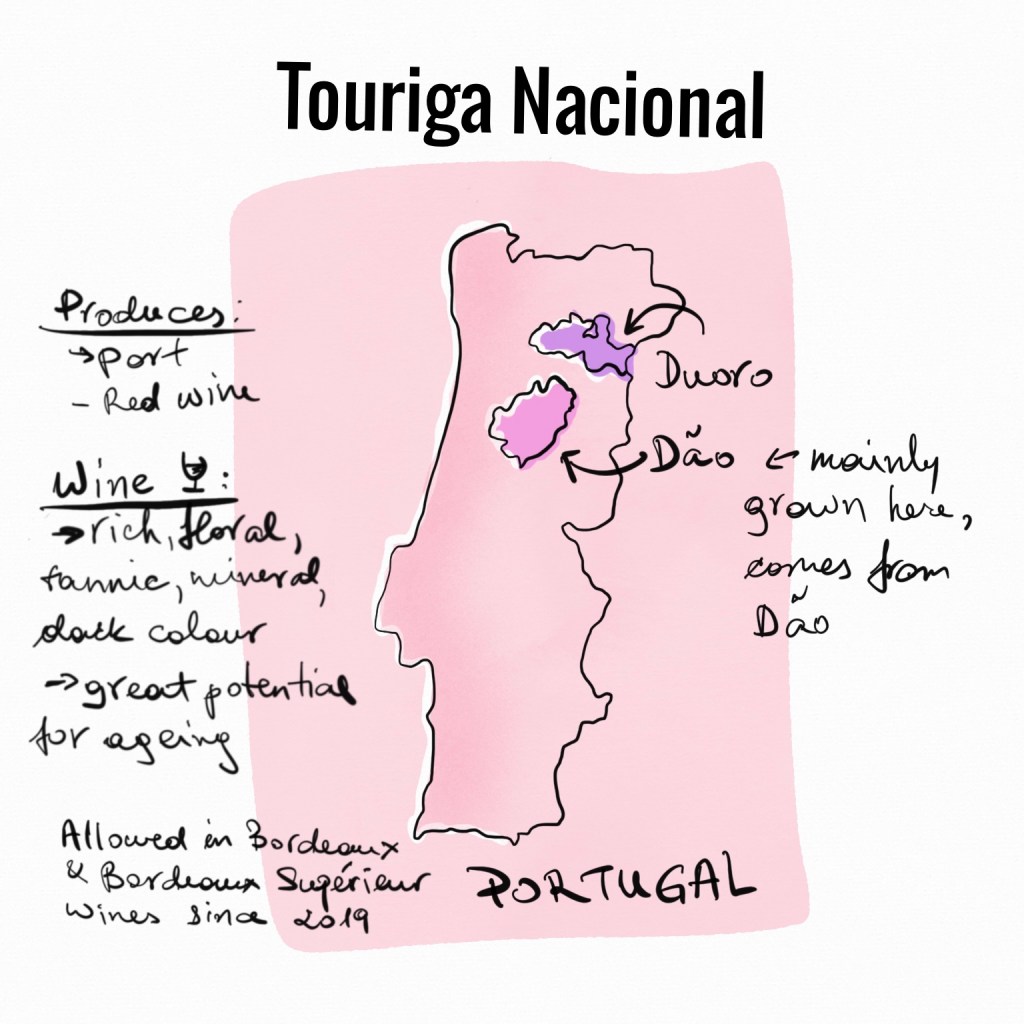
Touriga Nacional
Touriga Nacional – the Cabernet Sauvignon of Portugal and for a good reason!
In 2019, Bordeaux has decided to add Touriga Nacional together with 6 other grapes to the official list of grapes allowed in Bordeaux and Bordeaux Supérieur wines. For now these are allowed only in entry level Bordeaux and Bordeaux Supérieur labelled wines. The new grapes are allowed to be maximum 10% of the blend. Even so, this is a big step for an old region like Bordeaux and good news for Touriga Nacional.
Touriga Nacional is one of Portugal’s most popular grapes and is used to produce Port and dry red wine.
It is predominantly grown in Dão, where it also comes from, and the Duoro Valley. Touriga Nacional produces wines that are tannic, rich, mineral and have a dark color. These wines have a lot of floral aroma but at the same time can be very complex and have a good ageing potential.
Keep reading about wine here.
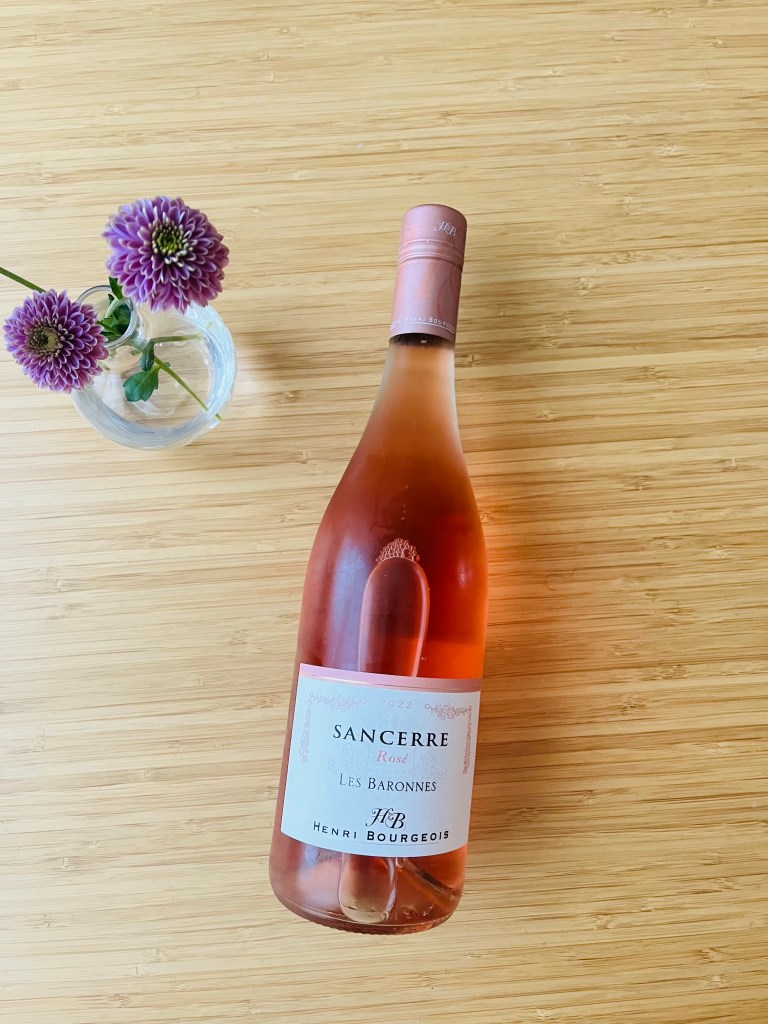
Sancerre Les Baronnes Rosé
2022
- Country: France, Loire Valley, Sancerre
- Producer: Henri Bourgeois
- Blend: Pinot Noir
- Alcohol content: 13%
- Tasting notes: fruity, red fruit, strawberry, citrus.
Keep reading about wines here.
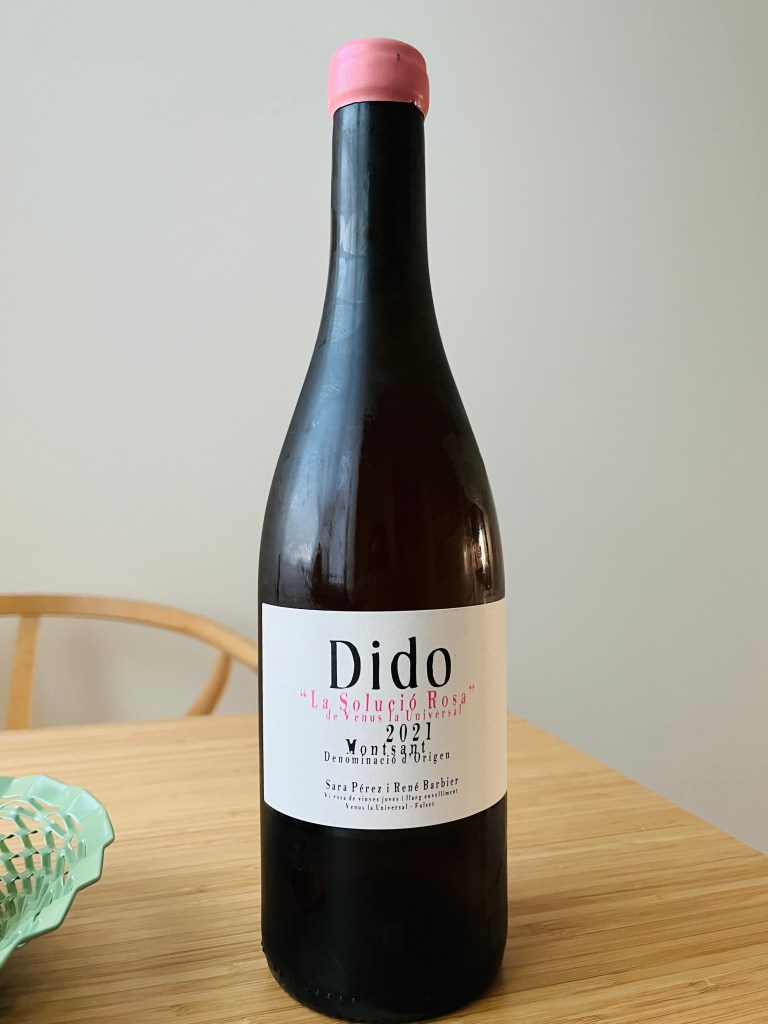
Venus La Universal
2021
- Country: Spain, Catalonia, Montsant
- Producer: Villa Degli Olmi
- Blend: 50% Garnatcha negra, 20% Macabeu, 15% Ull de llebre, 10% Carinyena, 2,5% Garnatcha blanca, 2,5% Garnatcha gris.
- Alcohol content: 13%
- Tasting notes: fruity, peach, pepper, strawberry, spice.
Keep reading about sparkling wines here.
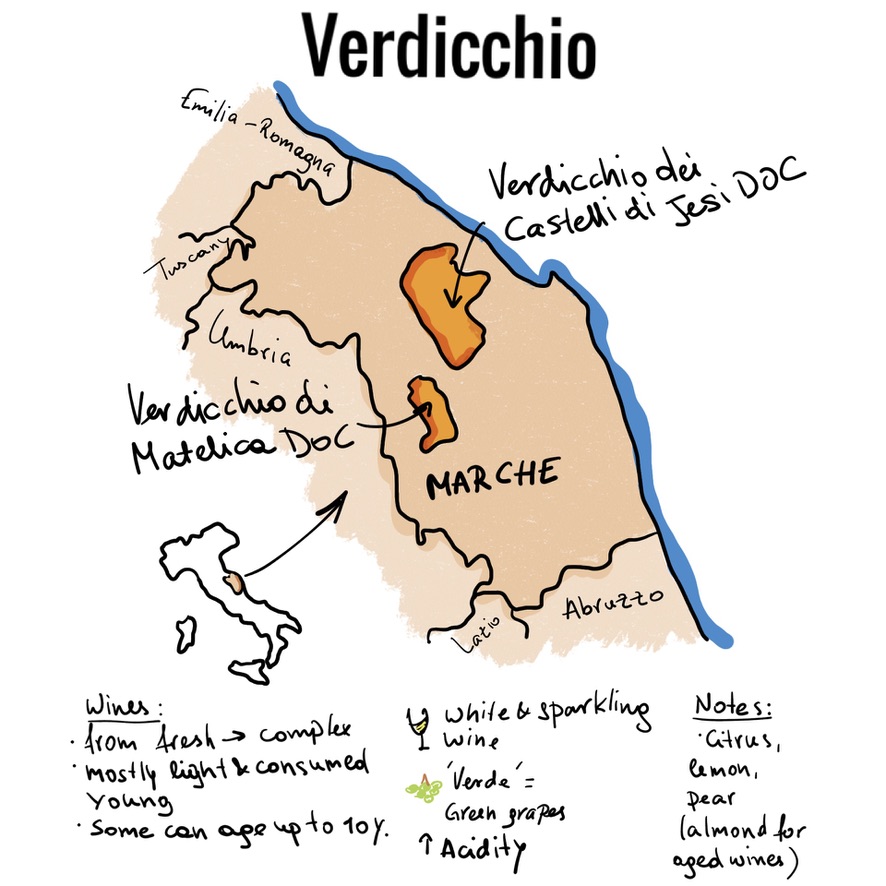
Verdicchio
Verdicchio is a white grape variety that comes from Italy. Today it is mainly grown in Marche in Verdicchio dei Castelli di Jesi DOC and Verdicchio di Matelica DOC.
Verdicchio produces wines that are mostly light and fresh, consumed young although it can also produce some more complex wines that can age up to 10 years. Its naturally high acidity levels means that it can produce some very crisp white wines but also sparkling wines.
The notes that are typical for these wines are: citrus, lemon, pear, (almond for aged wines).
Keep reading about wines here.
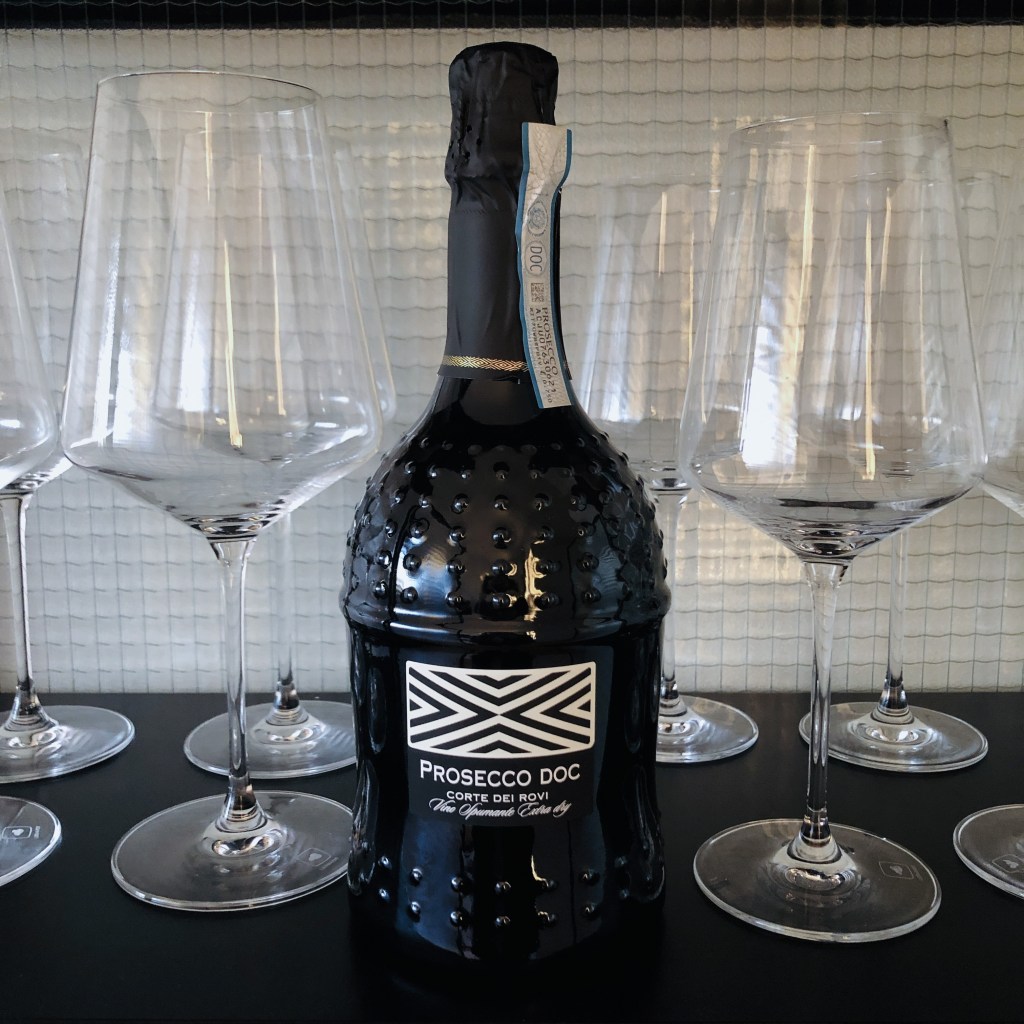
Corte dei Rovi Prosecco
N.V.
- Country: Italy, Veneto, Prosecco
- Producer: Villa Degli Olmi
- Blend: 100% Glera
- Alcohol content: 11%
- Tasting notes: fresh, acidic, aromatic, green apples, mineral, honey.
Keep reading about sparkling wines here.
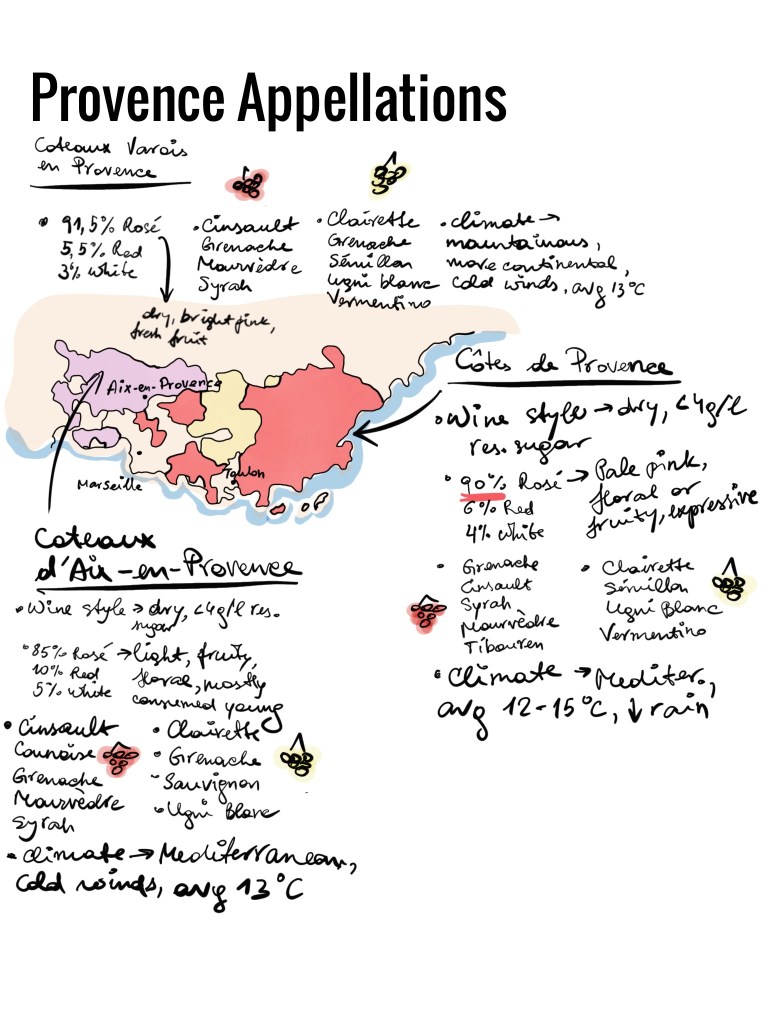
Provence Appellations
Provence is definitely the place for some of the best Rosé wines in the world. Let’s have a closer look at the Appellations in this area.
Coteaux Varais en Provence
- Wines:
- 91.5% Rosé – dry, bright pink, fresh fruit
- 5.5% Red
- 3% White
- Blend:
- Red grapes: Cinsault, Grenache, Mourvedre, Syrah
- White grapes: Clairette, Grenache blanc, Sémillon, Ugni blanc, Vermentino
- Climate: mountainous, more continental, cold winds, average temperatures of 13 degrees celsius.
Coteaux d’Aix-en-Provence
- Wines: dry less than 4 g/l of residual sugar
- 85% Rosé – light, fruity, floral, mostly consumed young
- 10% Red
- 5% White
- Blend:
- Red grapes: Cinsault, Grenache, Mourvedre, Syrah
- White grapes: Clairette, Grenache blanc, Sauvignon, Ugni blanc
- Climate: mediterranean, mountainous, cold winds, average temperatures of 13 degrees celsius.
Côtes de Provence
- Wines: dry less than 4 g/l of residual sugar
- 90% Rosé – pale pink, fruity, floral, expressive
- 6% Red
- 4% White
- Blend:
- Red grapes: Grenache, Cinsault, Syrah, Mourvedre, Tibouren
- White grapes: Clairette, Sémillon, Ugni blanc, Vermentino
- Climate: mediterranean, little rain, average temperatures of 12-15 degrees celsius.
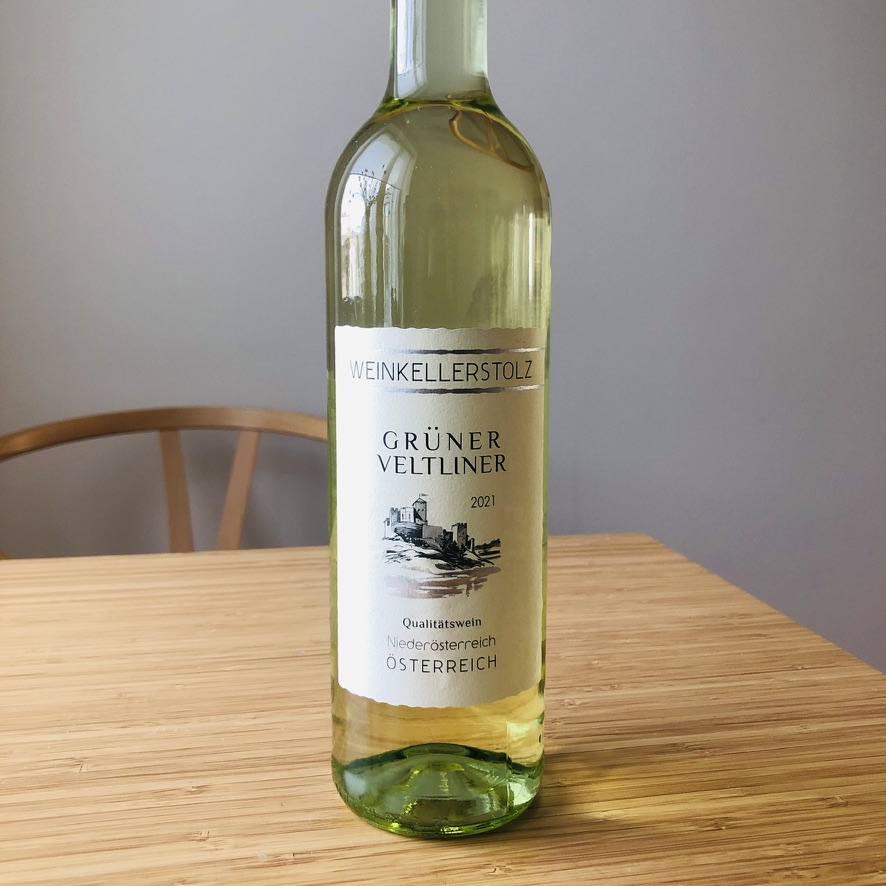
Grüner Veltliner
2021
- Country: Austria, Weinland, Niederösterreich
- Producer: Weinkeller Stolz
- Alcohol content: 12%
- Tasting notes: fresh, light, acidic, well balanced, green apples, citrus, mineral.
Keep reading about wines here.
Riesling – How to read a the label!
There are many clues on a Riesling wine label, things that can indicate the quality, grape ripeness, dryness/sweetness levels etc.
An example is the very simple label of a Sybille Kuntz bottle – seemingly very minimal, but holding a lot of valuable information.

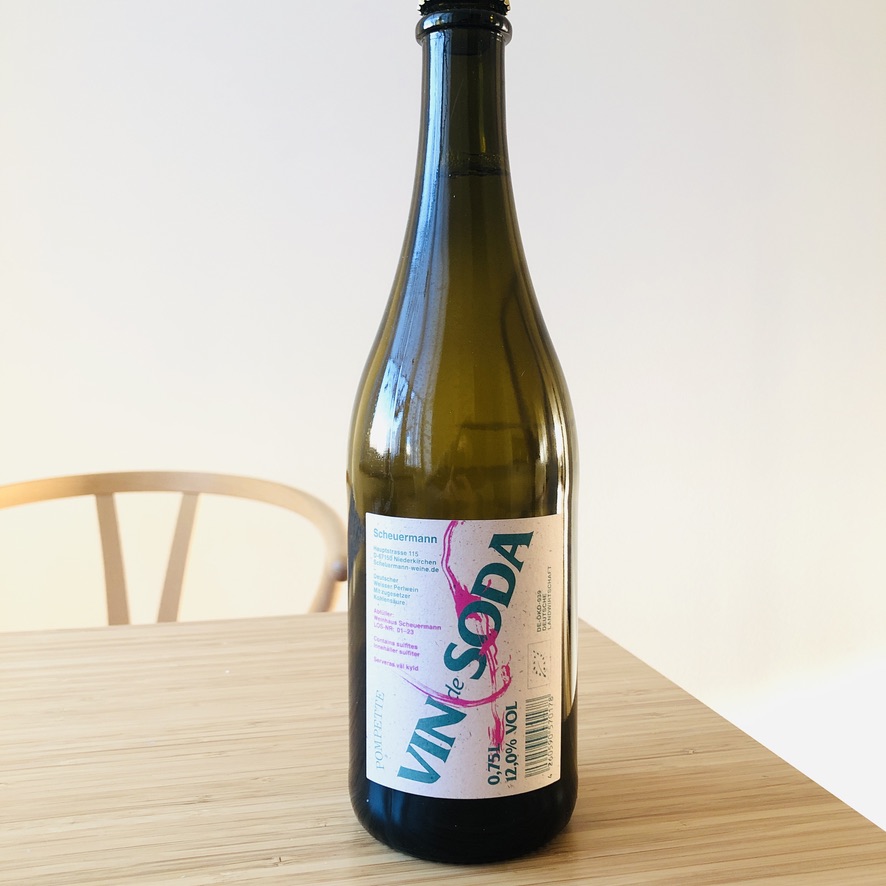
Vin de Soda
NV
- Country: Germany
- Producer: Scheuermann
- Alcohol content: 12.5%
- Tasting notes: fresh, acidic, green apples, lemon, melon.
Keep reading about wines here.
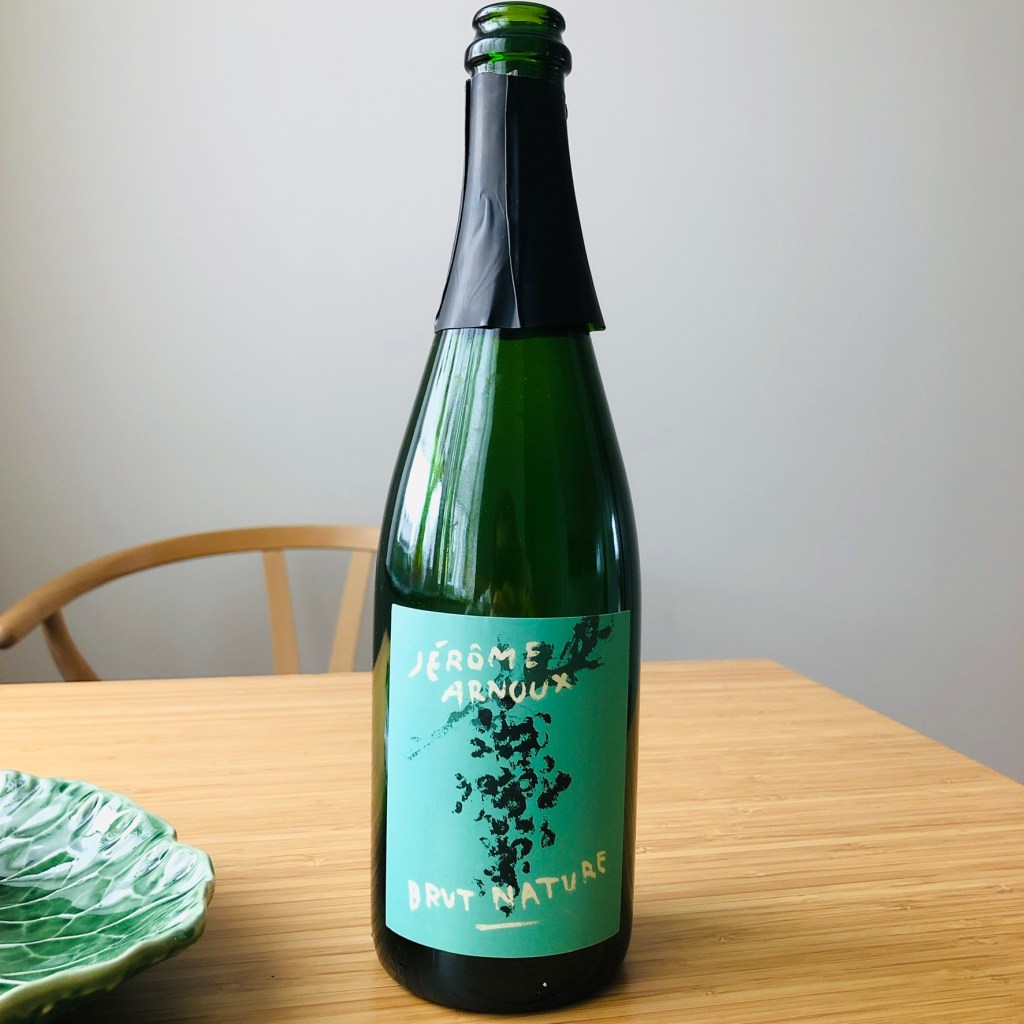
Jérôme Arnoux
Brut Nature
- Country and region: France, Jura, Crémant du Jura
- Producer: Jérôme Arnoux
- Blend: Pinot Noir, Chardonnay
- Alcohol content: 12.5%
- Tasting notes: fresh, acidic, green apples, minerals, lime.
Keep reading about Crémant here.
White Negroni 2.0
This is a variation of the classic White Negroni, replacing Suze with Campari/Aperol. It’s lighter than the usual negroni, it’s refreshing and lemony.
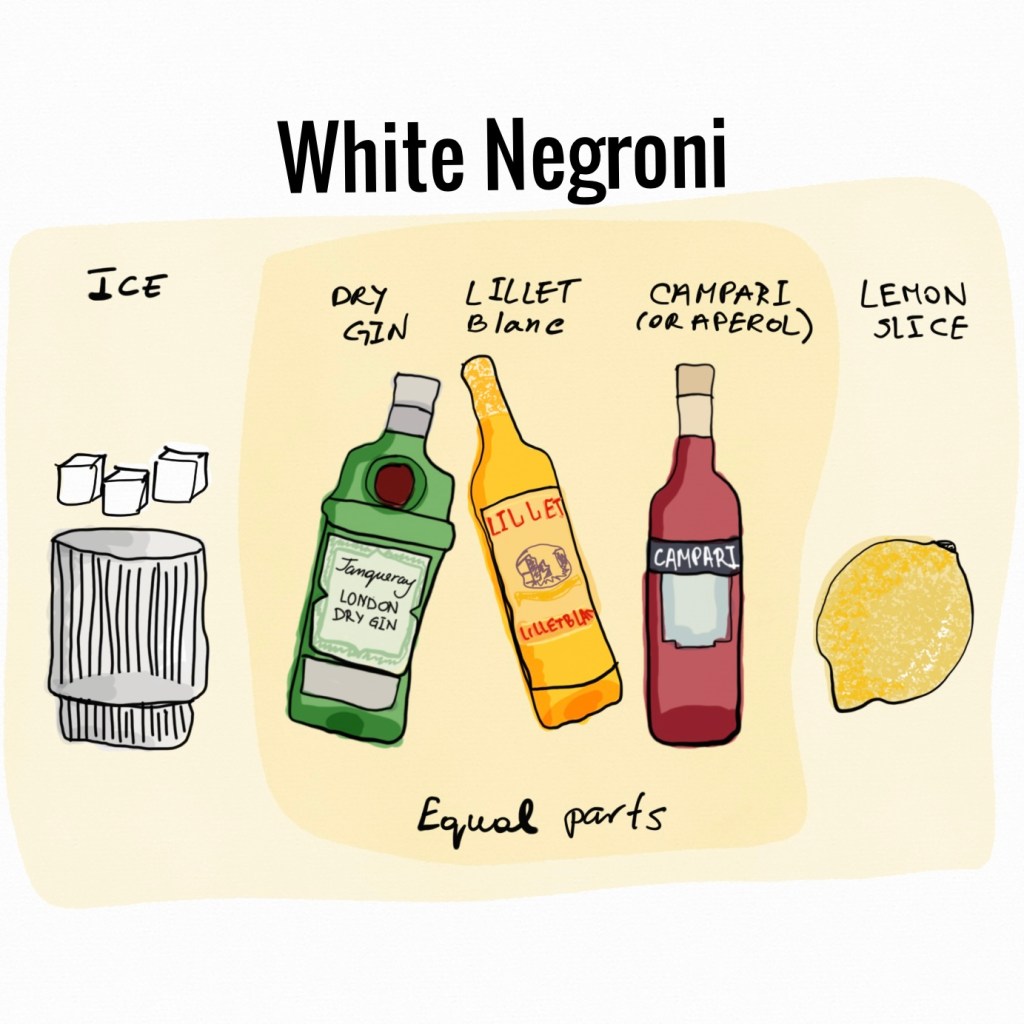
Here is what you will need:
- Ice – I like to first add a lot of ice then pour the rest of the ingredients, stir well until cooled and then pour it into a glass with a big block of ice
- Dry gin – 3-4 cl (I prefer 4 cl but it really depends on what you like). I normally use Tanqueray but you can use any dry gin that you like
- Lillet Blanc – 3 cl, the liquid that holds it together
- Campari or Aperol – 3 cl, here you would add Suze in a classic White negroni however Suze or any good Suze alternative can be hard to find
- Lemon slice/twist
Enjoy!
Keep reading about wines here.
English Sparkling Wine
English sparkling wine has become a lot more popular in recent years with some big houses like Tattinger planting vines in Kent and many English wines gaining international recognition.
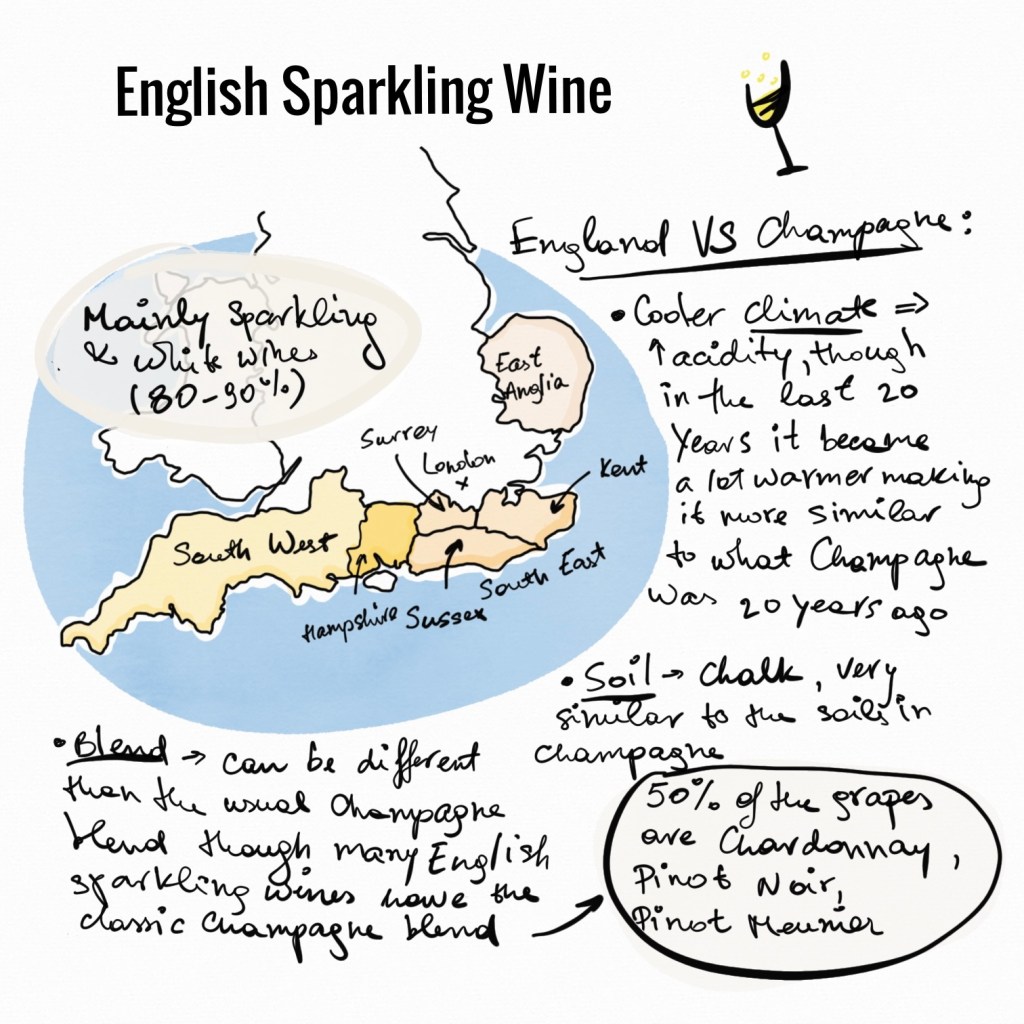
Most of Englands wine production focuses on sparkling and white wines (84%) and only a small percentage on red wines.
In the last decades due to climate change, England’s cool climate has become a lot more similar to that of Champagne in the ’80s. It’s not only the climate that is similar to Champagne, the chalk soils are also almost identical.
When it comes to blend, English sparkling wines can have a wider blend than the classic Champagne blend though the 3 main grapes – Chardonnay, Pinot Noir and either Pinot Meunier – are still the main choice. Bacchus which is a cross between Silvaner x Riesling and Müller-Thurgau, is also sometimes used in blends with Chardonnay. These are also the grapes that are primarily planted in Southern England.
Method wise, English sparkling wines use the traditional method with the second fermentation taking place in the bottle – same as in Champagne.
When it comes to ageing and classification, English sparkling wines do not have the same requirements as Champagne, often being aged for less time and resulting in a fresher taste.
All in all English sparkling wines are a great alternative to Champagne, with high quality but at a slightly better price point.
Keep reading about sparkling wines here.
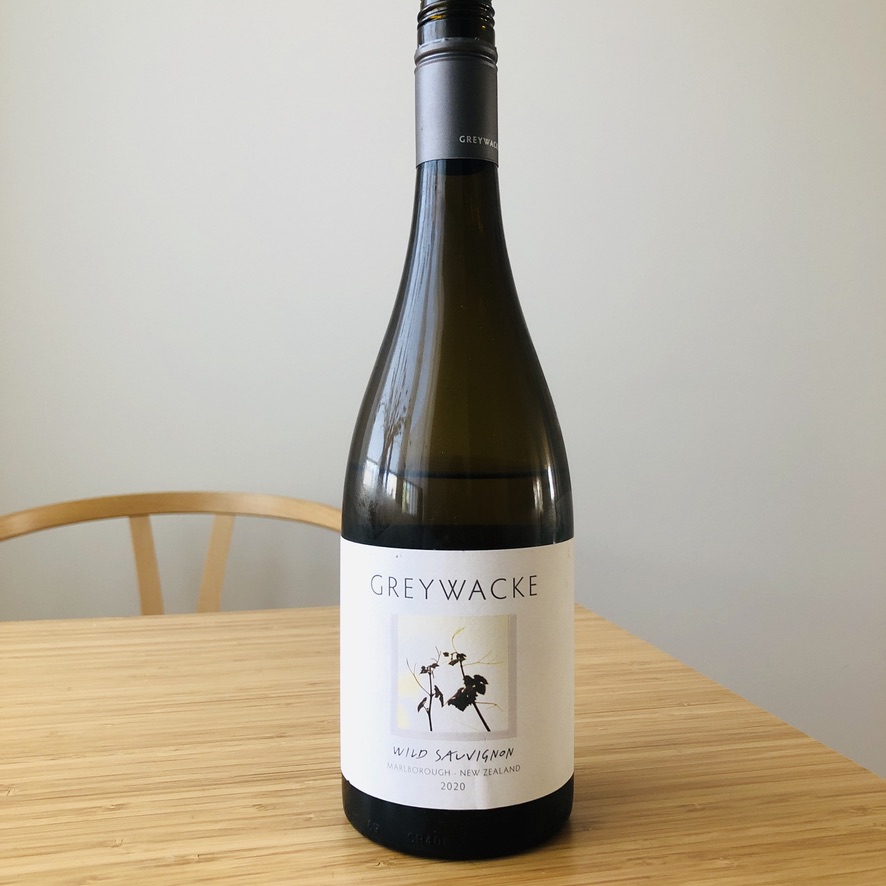
Greywacke Wild Sauvignon
2020
- Country and region: New Zealand, Marlborough
- Producer: Garage Wine Co.
- Blend: Sauvignon blanc
- Alcohol content: 13.5%
- Tasting notes: fresh, well balanced, notes of yellow apples, lemon, vanilla, minerals
Keep reading about wines here.
Riesling – Regions
Riesling is a grape that has its origins in Germany but throughout the years has spread to many countries like USA, France, Austria, Australia, New Zealand, Moldova and many other.

The largest producer still remains Germany (around 24 ha vs 5 ha in USA) in regions like Pfalz, Mosel, Rheinhessen.
As a grape, Riesling is very expressive of its terroir, meaning that it will produce a different wine depending on the climate and soil it is grown.
Depending on the climate, Riesling wines will tend to exhibit some of the below characteristics:
- Cool climates: like Germany, high in acidity, notes of green apple, peach, fresh herbs
- Intermediate climates: high in acidity, notes of red apple, peach, quince, honey, spice
- Warm climates: high acidity, notes of pineapple, mango, apricot, honey
- Ice wine (to come in a different post): sweet, candied lemon, pineapple, apricot
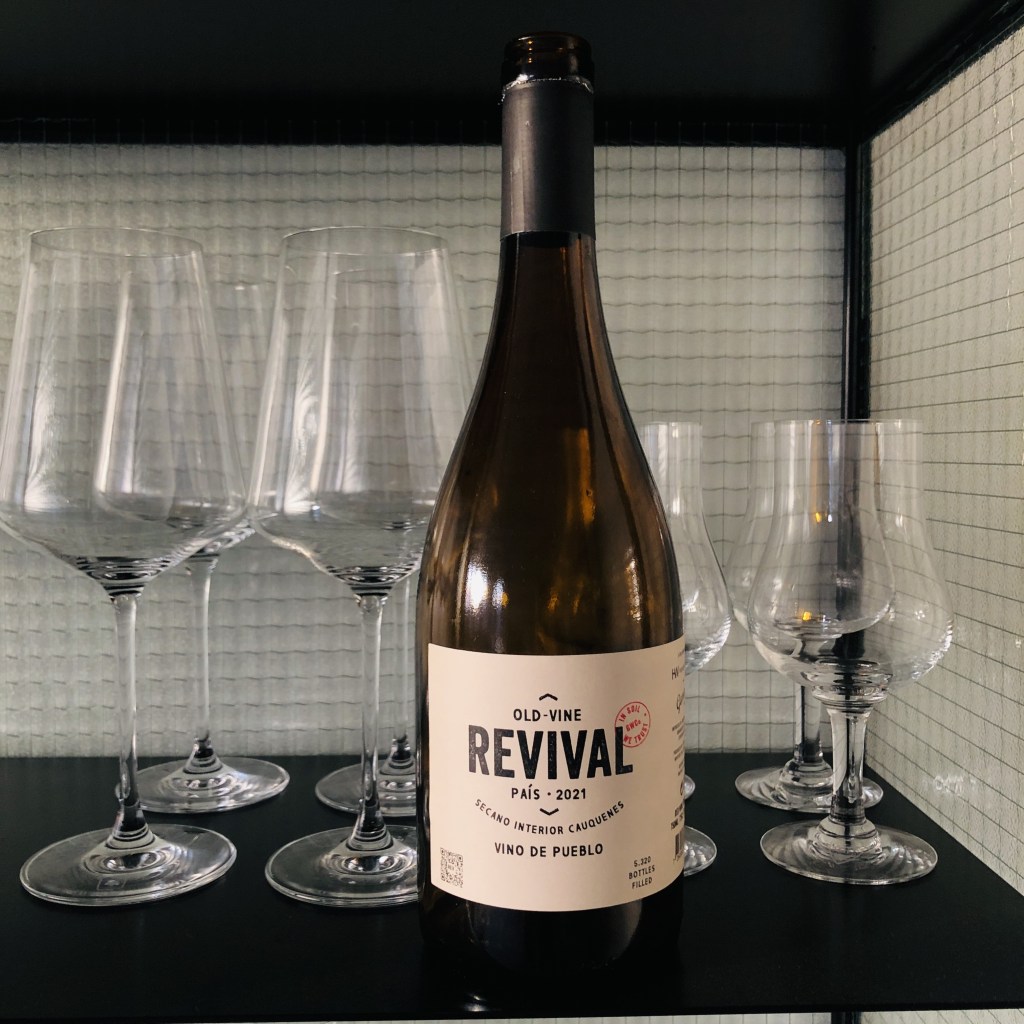
Revival Old Vine País
2021
- Country and region: Chile, Valle Central, Maule
- Producer: Garage Wine Co.
- Blend: Cinsault
- Alcohol content: 13%
- Tasting notes: Fruity, red fruit and floral, strawberry, cherry, violet, medium body, soft tannins
Keep reading about wines here.

Bordeaux Grape Varieties
Red wine:
- Merlot 66%
- Cabernet Sauvignon 23%
- Cabernet Franc 10%
- Other 2%
White wine:
- Semillon 45%
- Sauvignon Blanc 43%
- Muscadelle 5%
- Other 7%
Keep reading about wines here.
Koshu
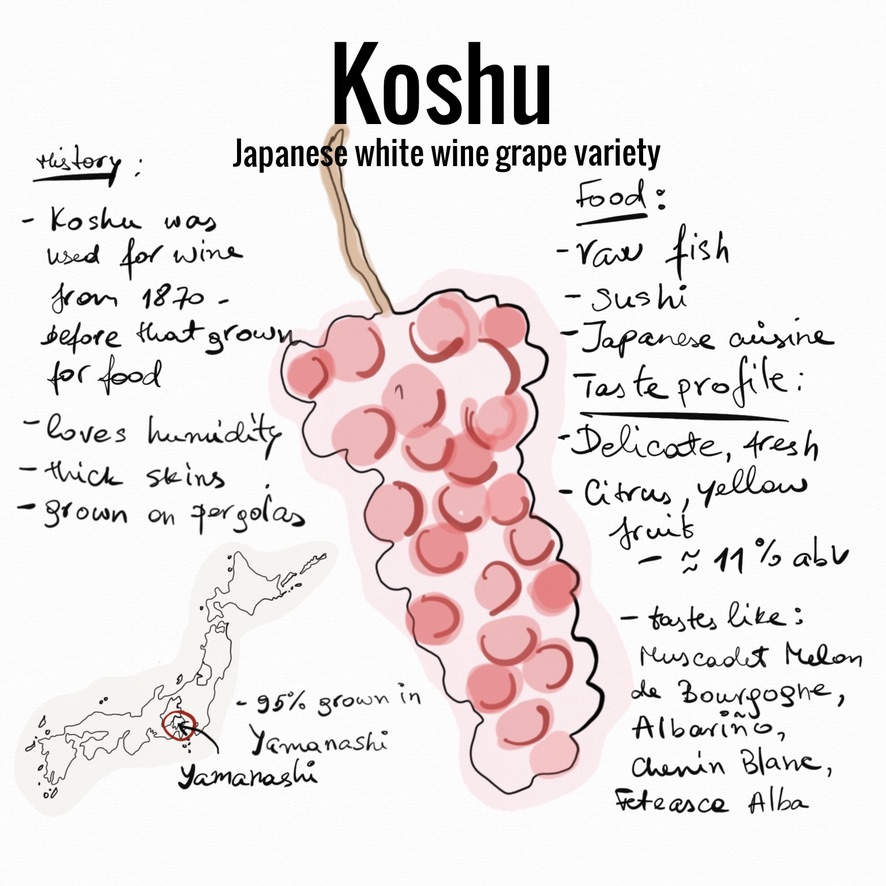
Koshu – one of the most popular Japanese grapes for white wine.
Koshu started being used in the production of wine only in 1870, up until then it was mainly grown for food. As a grape it has thick skins that can withstand heat and humidity which is why it thrives in the Yamanashi region where it primarily grown today.
The grapes have a very nice cherry pink hue and are normally grown on pergolas in order to let the air travel throughout so the bunches don’t get too humid. Japan also uses special wax paper “umbrellas” around the bunches which protects them from the heat and the rain, a technology that is quite expensive.
Wines made from Koshu are usually delicate and light with only around 11% abv that go very well with Japanese cuisine like raw fish and sushi. The wines can be compared to for example Melon de Bourgogne, Chenin blanc, Albarino.
Keep reading about wines here.
Wines for your Christmas Dinner
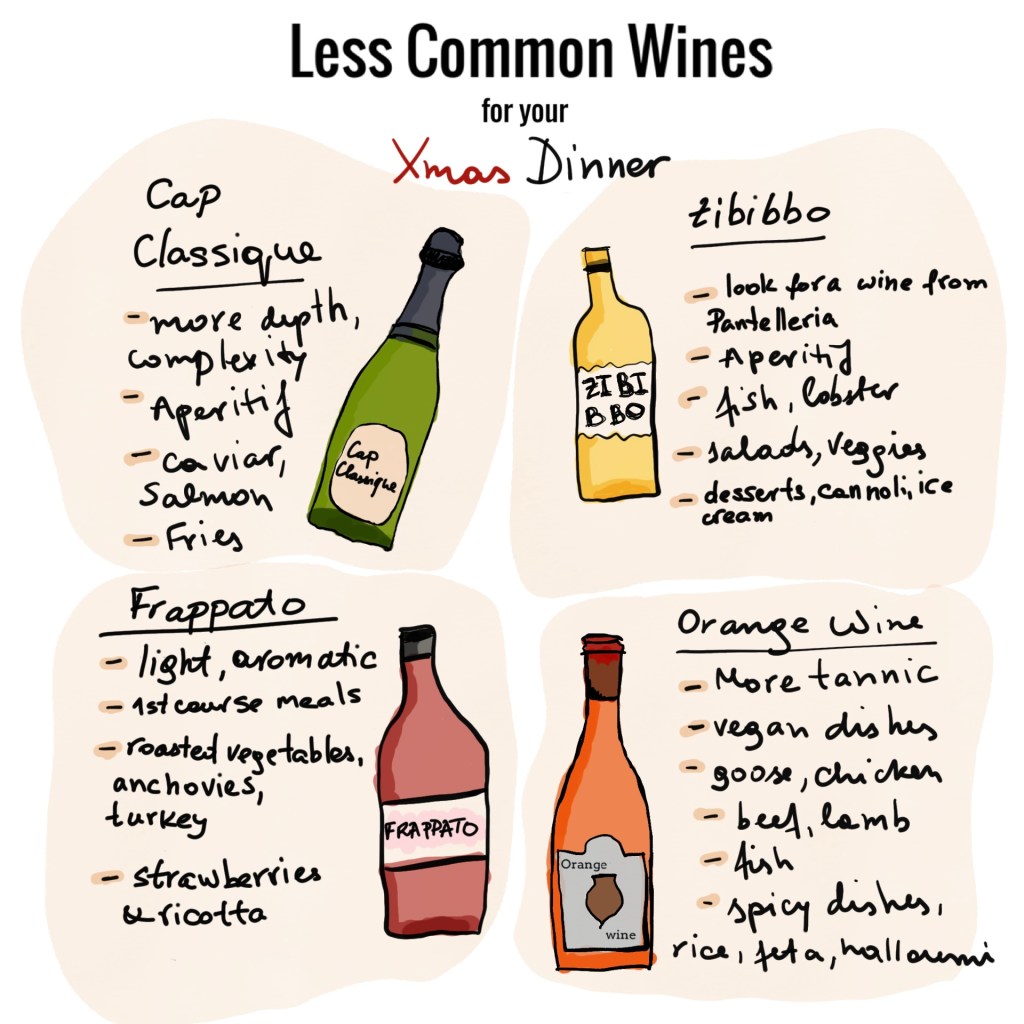
There are many wines for the Christmas dinner like the classic choices: Barolo, Amarone, Valpolicella Ripasso, Sancerre, Champagne to name a few but why not try some less traditional ones?
On this year’s list we have 2 wines from Sicily, one from South Africa and one from well..many places.
- Bubbly option: Cap classique – aged for a minimum of 7 years, this South African sparkling wine made with the traditional method is a great alternative for the classic Champagne
- Aperitif option (but not only): Zibibbo – one of my favorite white grapes from Sicily, full of aroma, goes well with fish, salads but also desserts
- Red option (light red): Frappato – aromatic, light, Sicilian, maybe won’t be your main course wine but why not a first course wine?
- Orange wine – this one I have recommended last year as well because it’s very diverse, it can be an aperitif, it goes really well with heavier vegetarian dishes, spicy food, rice, fish, beef, plus it’s very popular at the moment.
Keep reading about wines here.
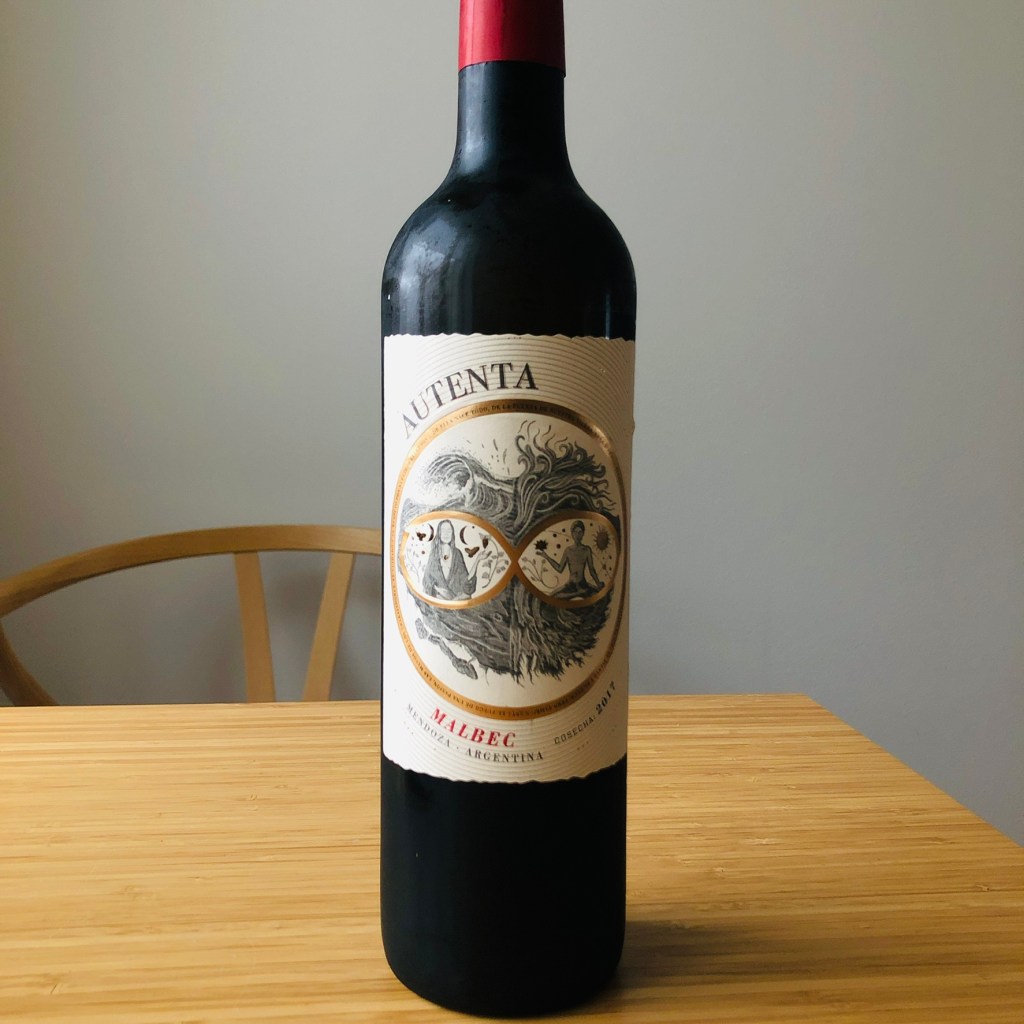
Autenta
Malbec, 2017
- Country and region: Argentina, Cuyo, Mendoza
- Producer: Finca Buenaventura
- Blend: Malbec
- Alcohol content: 14%
- Tasting notes: Fruity, blueberries, violets, spice, tannic, full body
Keep reading about Malbec here.
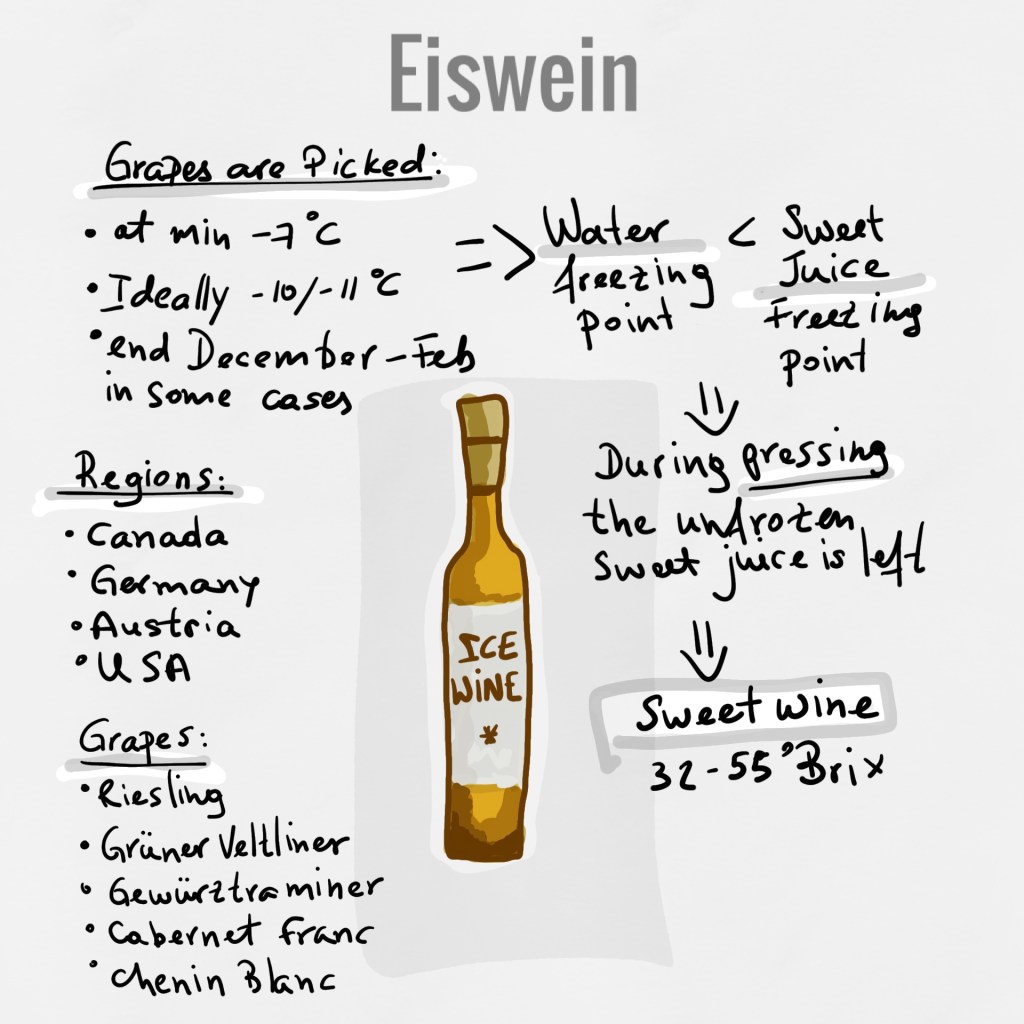
Eiswein
Or Ice wine – sweet sweet wine made from frozen grapes – yes indeed, grapes that are harvested around late December – even February in some cases.
Ice wine is produced from grapes that have frozen at a min of -7 C but ideally around -10/-11 C. They are picked and crushed frozen and because the water freezes faster than the sweet juice in the grape (note that this is what I mean in the above picture), what is left is a very sweet must of 32-55 Brix.
The regions that produce Ice wine are:
- Canada
- Germany – where it all started
- Austria
- USA
The grapes that love this kind of extreme cold weather are:
- Riesling
- Gruner Veltliner
- Gewürztraminer
- Cab Franc
- Chenin Blanc.
Keep reading about wines here.
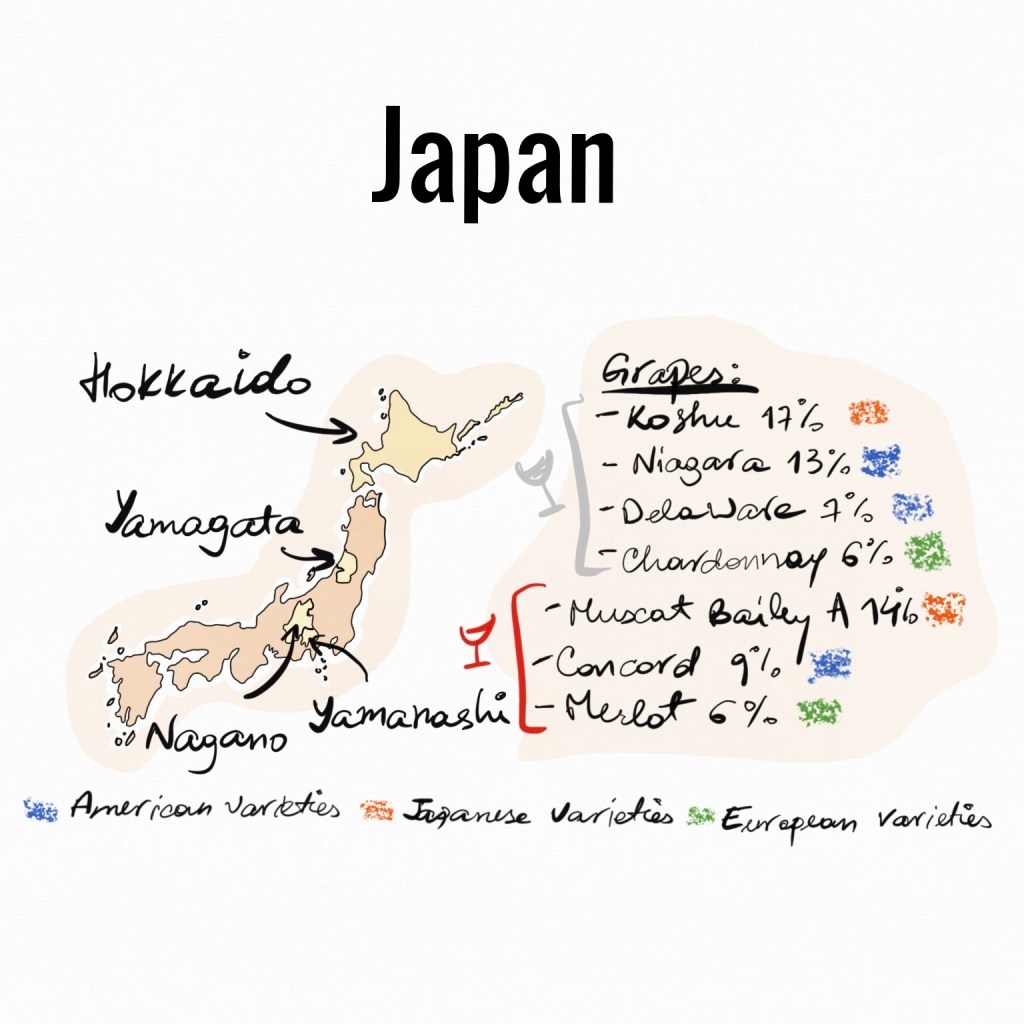
Japan
Japanese wine production doesn’t have a long history with the first wine company being established only in 1870.
Because of its tannin and acidity which was uncommon for Japan during that time, it wasn’t until the 80s and 90s when Japanese wine started to become more popular both domestically and also internationally.
Today there are around 300 wineries in Japan which are all small to medium sized. When it comes to climate, Japan has a very wide range of temperatures from very hot and humid weather to cold and frosty temperatures which creates very different wines depending on the region.
Japan’s grape varieties can be split into:
- Asian wild grapes (Vitis coignetiae etc.) – Koshu, Muscat Bailey A
- European grapes (Vitis vinifera) – Merlot, Chardonnay
- American wild grapes (Vitis labrusca etc.) – Concord, Niagara
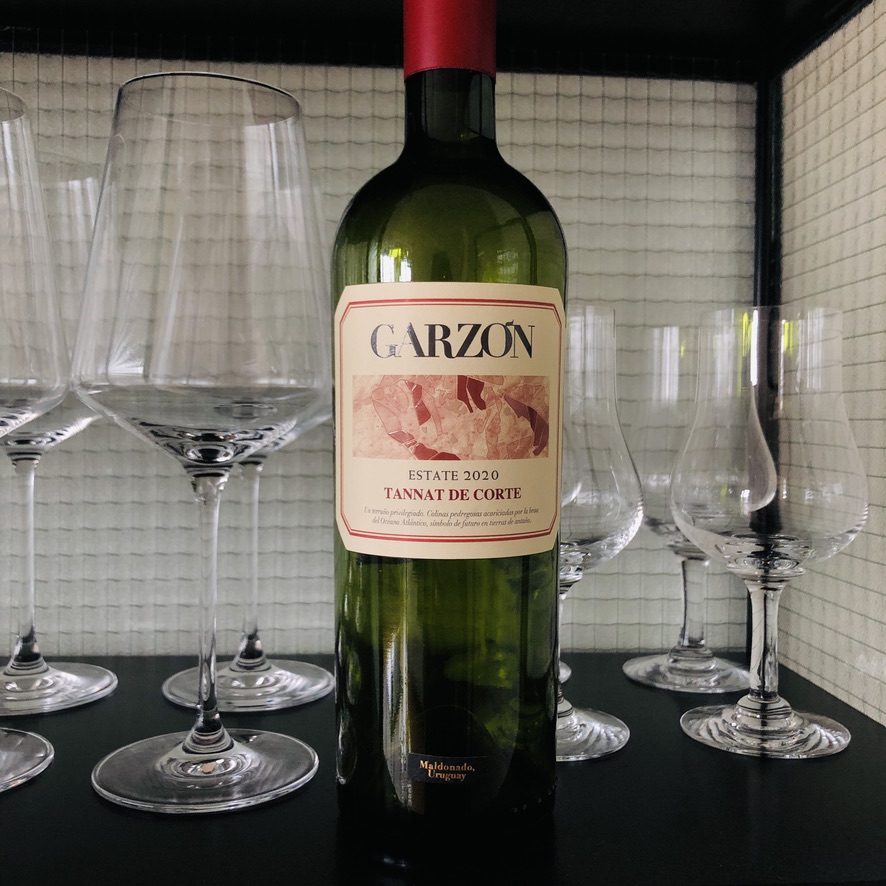
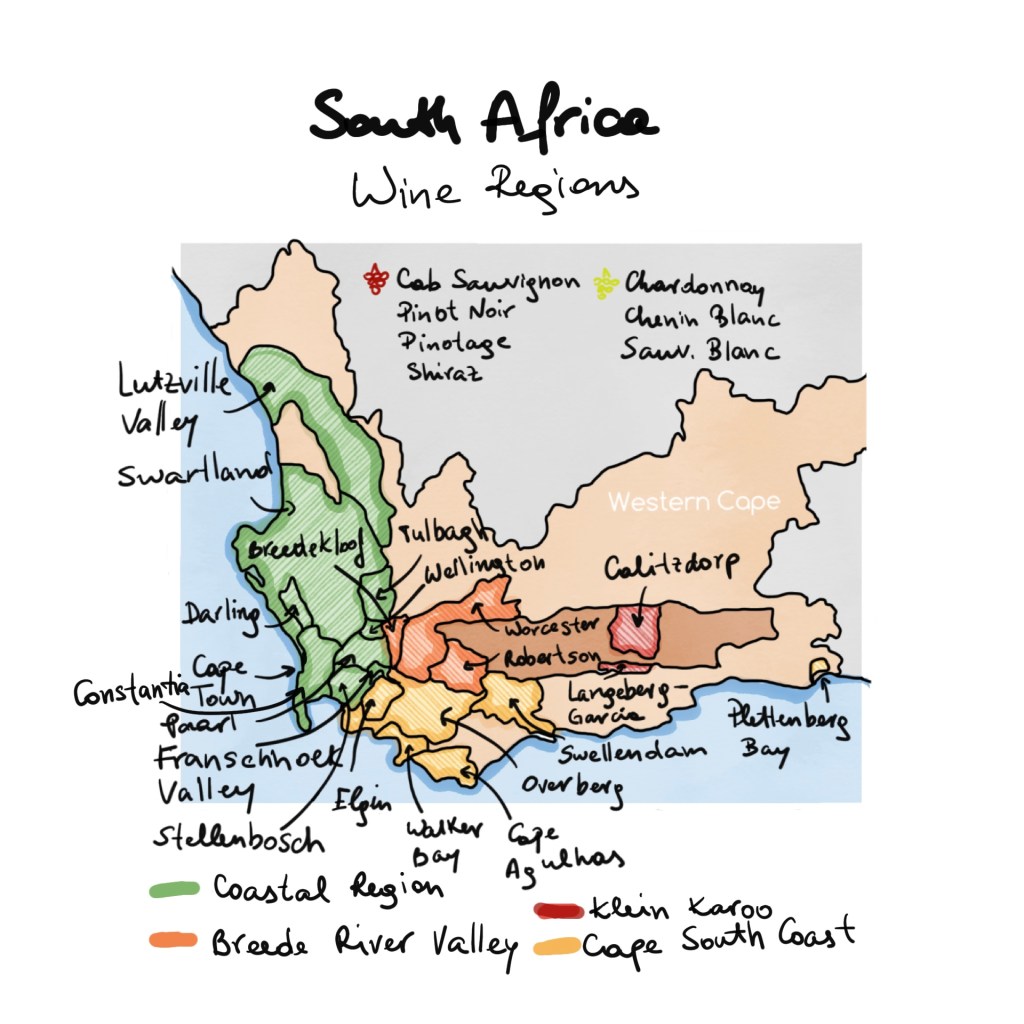
South Africa
South African Wine – a very brief intro! South Africa has a long history of producing wine that dates back to the 1650s when Jan van Riebeeck planted the French grapes he brought with him.
Most of the wine production takes place in the Western Cape where the wine is classified based on its Wine of Origin (WO) designations.
The WO classification is made up of geographical units (eg. Western Cape), regions (eg. Breede River Valley), districts (eg. Darling) and then wards (eg. Constantia).
The 3 main wine regions with some of their best known districts:
- Coastal Region – Franschhoek, Stellenbosch, Swartland, Paarl, Walker Bay
- Breede River Valley – Robertson
- Cape South Coast – Elgin
Some of the most common grapes
White grapes (55%)
- Chenin Blanc
- Colombard
- Sauvignon Blanc
- Chardonnay
Red grapes (45%)
- Cabernet Sauvignon
- Shiraz
- Pinotage – specific to South Africa
- Merlot
Let’s not forget about Cap Classique, which is South Africa’s take on Champagne. It is made in the same way as Champagne (traditional method) however the blend can be any South African grapes and when it comes to aging, Cap Classique will age up to 7 years, unlike 3 for Champagne.
Keep reading about wine here.
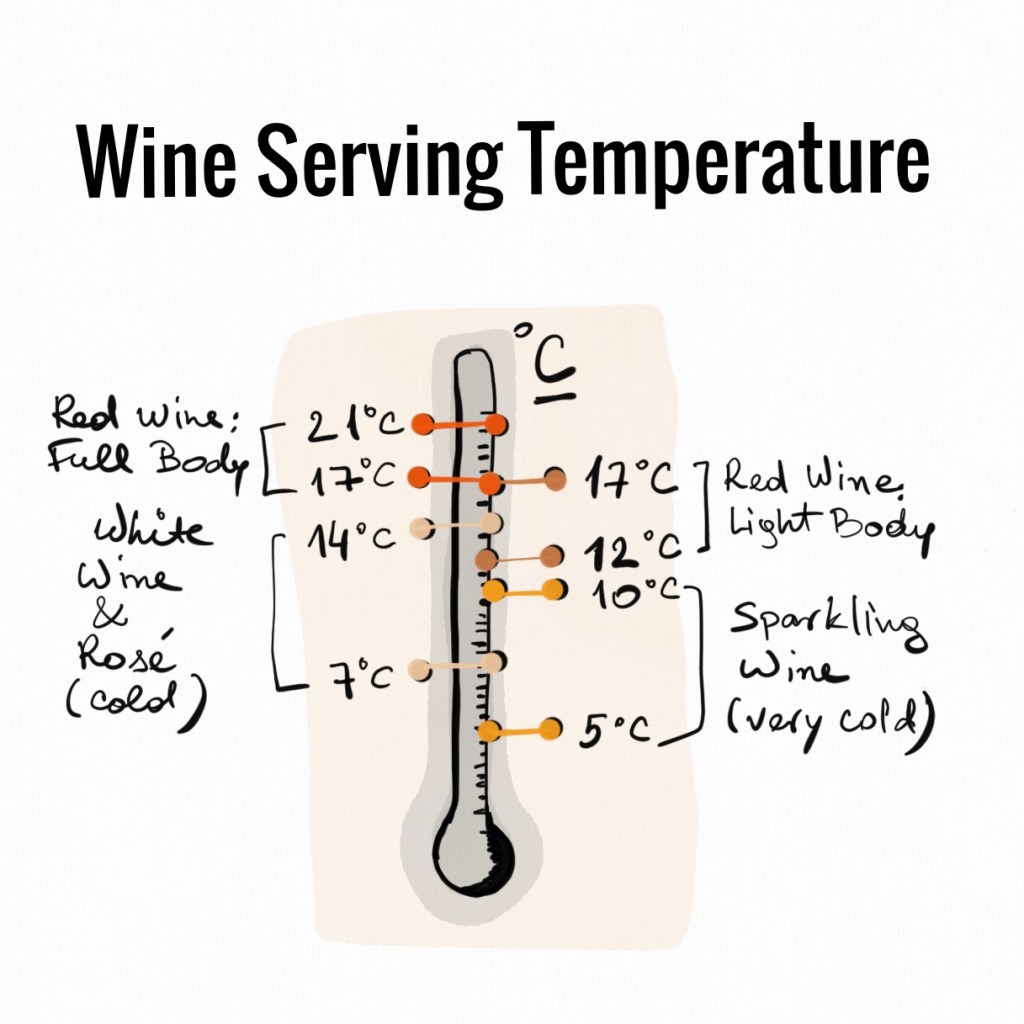
Wine Serving Temperature
Wondering what temperature to serve wine at? Keep in mind the fuller and richer in body the wine – the higher the temperature. Below a quick guide:
- Sparkling wine: 5–10°C
- White wine & Rosé: 7–14°C
- Light-bodied red wine: 12–17°C
- Full-bodied red wine: 17–21°C
Order the print version on the mycupofwine instagram.
Keep reading about wine here.
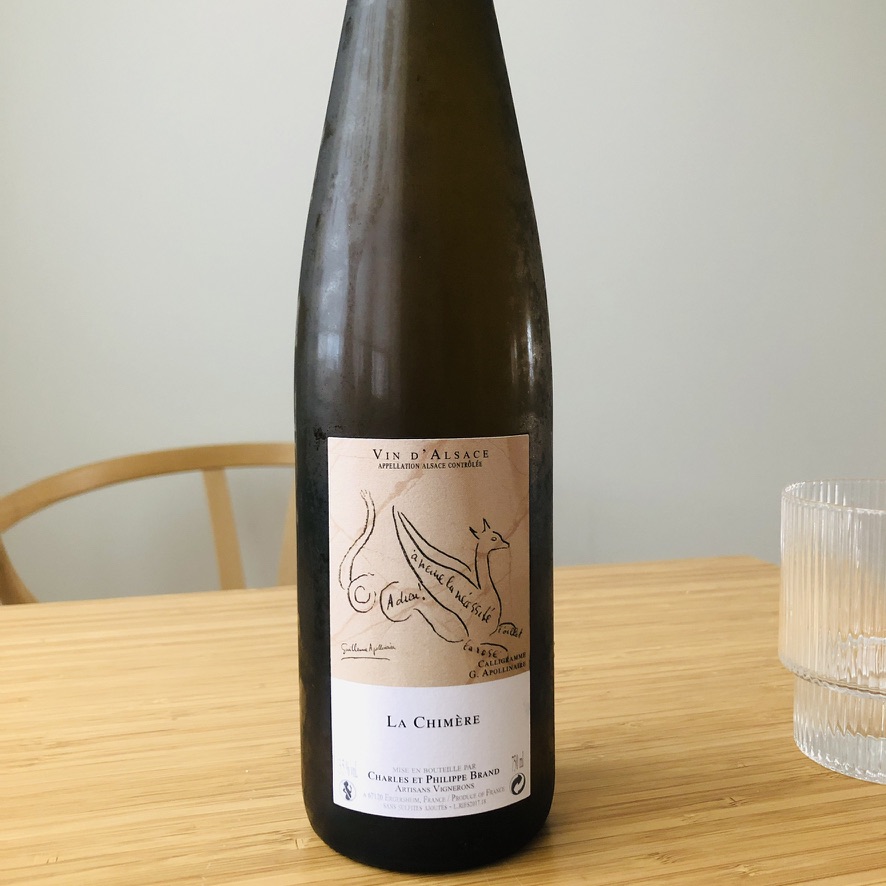
La Chimère
Riesling
- Country and region: France, Alsace
- Producer: Brans & Fils
- Blend: Riesling
- Alcohol content: 13,5%
- Tasting notes: Fruity, apple, honey, minerals, citrus, crisp, well balanced
Keep reading about wine here.
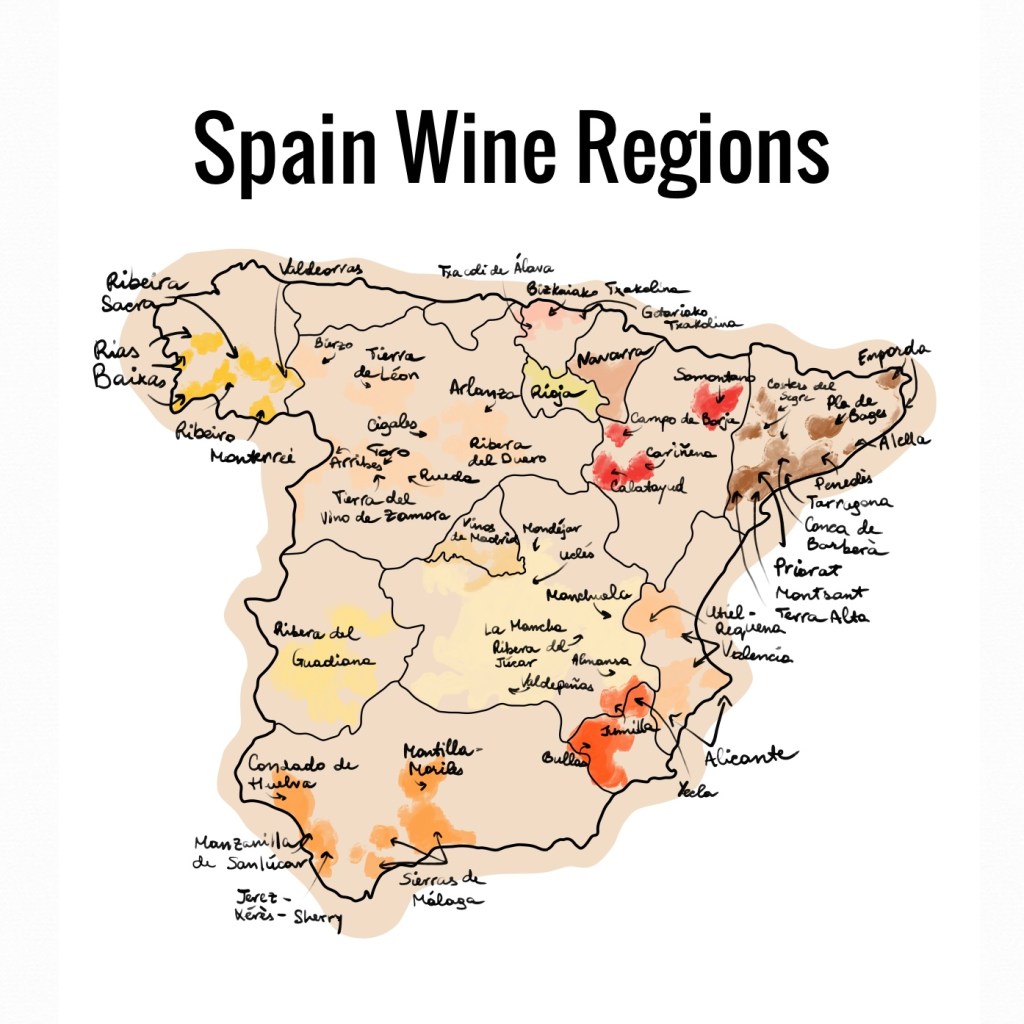
Spain Wine Regions
Read about Spanish grapes below:
Order the print version of the Spanish wine regions on the mycupofwine instagram.
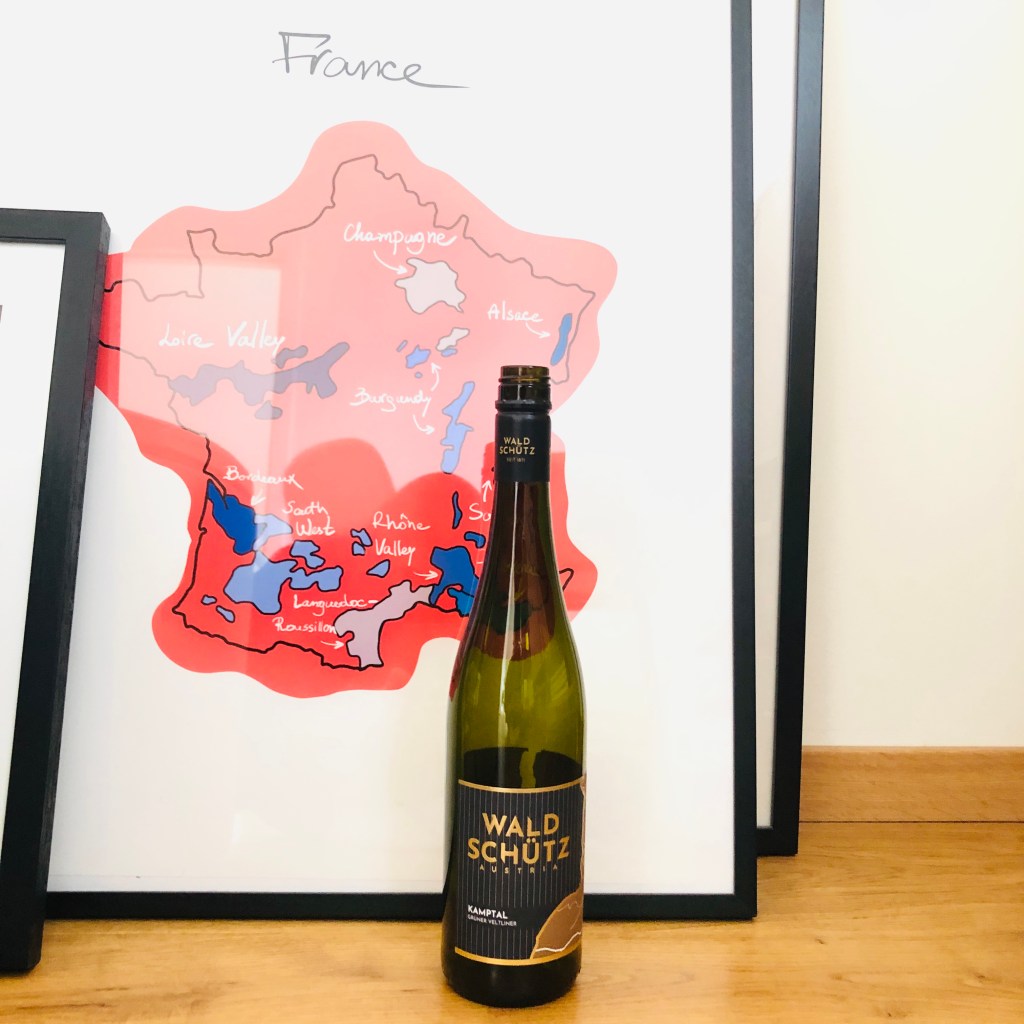
Waldschütz
Kamptal Grüner Veltliner, 2020
- Country and region: Austria, Niederösterreich, Kamptal
- Producer: Weingut Waldschütz
- Blend: Grüner Veltliner
- Alcohol content: 12,5%
- Tasting notes: Fruity, white pepper, pear, mineral, light, crisp
Keep reading about wine here.
Beaujolais Blanc
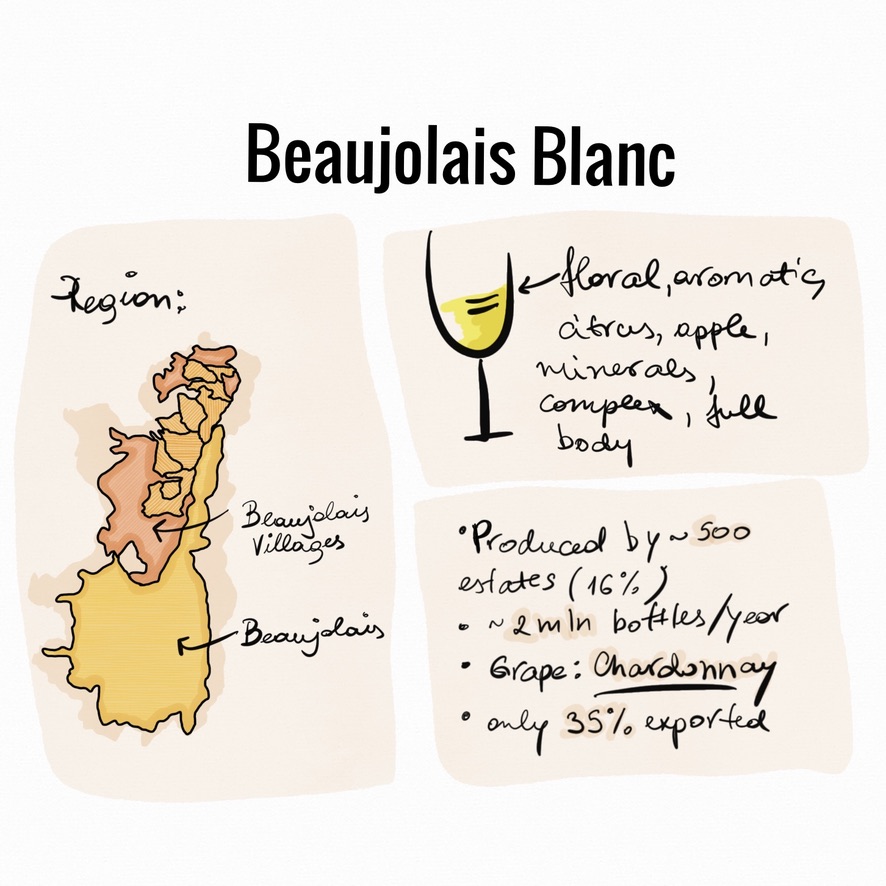
We are all familiar with the red Beaujolais wines, but actually around 5% of all wine production in Beujolais is white wine.
White Beaujolais is made from Chardonnay, it’s produced only in Beaujolais and Beaujolais Villages AOCs (no crus) and mainly for local consumption. Only 35% of the wines are exported mainly to USA, UK, Japan and Canada.
Beaujolais whites are full bodied, characterised by notes of citrus, while the Beaujolais Villages whites are more aromatic, floral and mineral.
Keep reading about how red Beaujolais here.
How red wine is made: Pressing
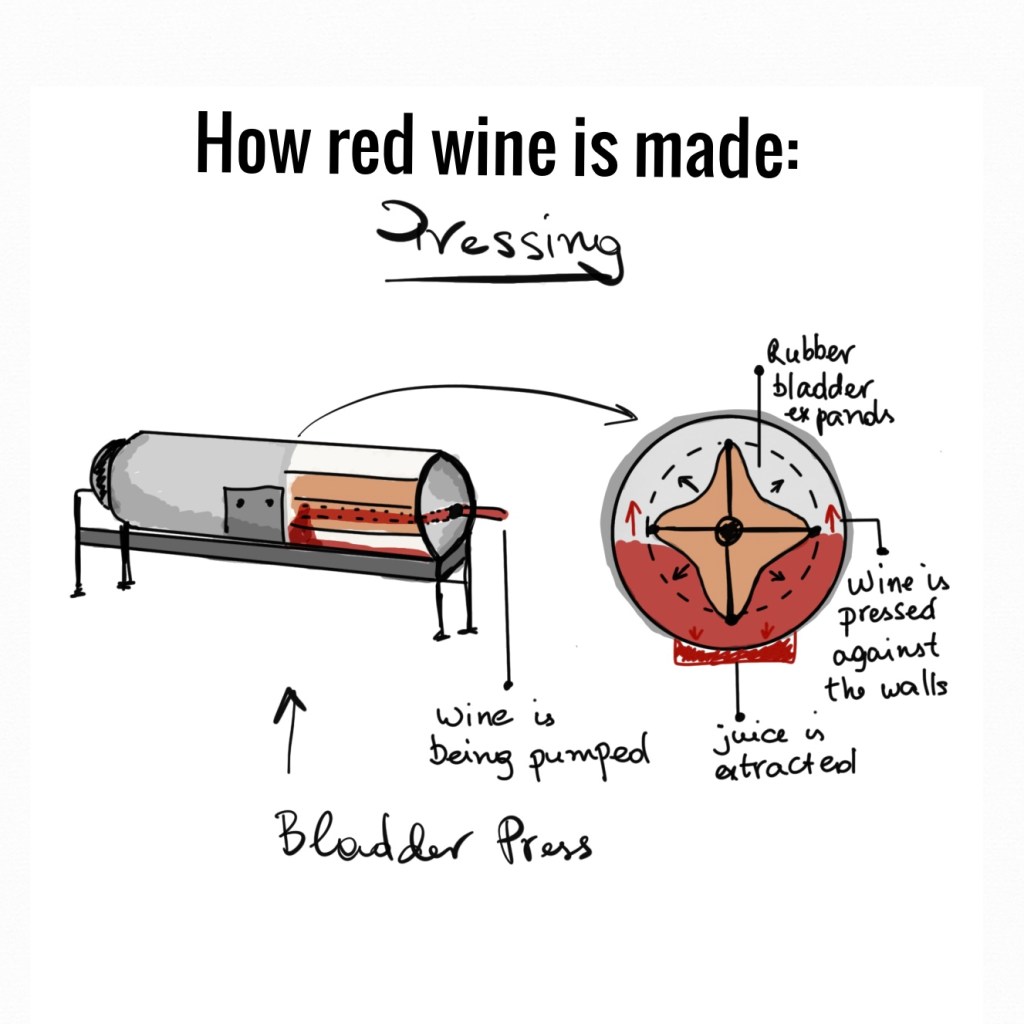
Pressing is basically filtering the wine from the all the skins, stems and seeds so that you are left with the clear juice. This is done by pumping the fermented wine into a wine press such as a bladder press.
The bladder press has an inflatable rubber bladder inside which expands depending on the amount of pressure you want to apply, pushing the grapes to the side and gently extracting the juice. The bladder press is a cylinder which will sometimes rotate in order to mix all the remaining wine in the press.
When the wine is pumped into the wine press, before any pressure is applied, there will be juice that will freely start running through the press which is called free run juice.
As the pressing of the remaining mass of skins and grapes continues, the winemakers will usually decide how firmly they want to press. The higher the pressure, the higher the amount of phenolics are extracted which may result in a harsher wine. Winemakers will often keep the juices they obtain from each press separately and test them first before deciding to blend them since free run wine is usually not as tannic and intense as the press wine.
Keep reading about how red wine made here.
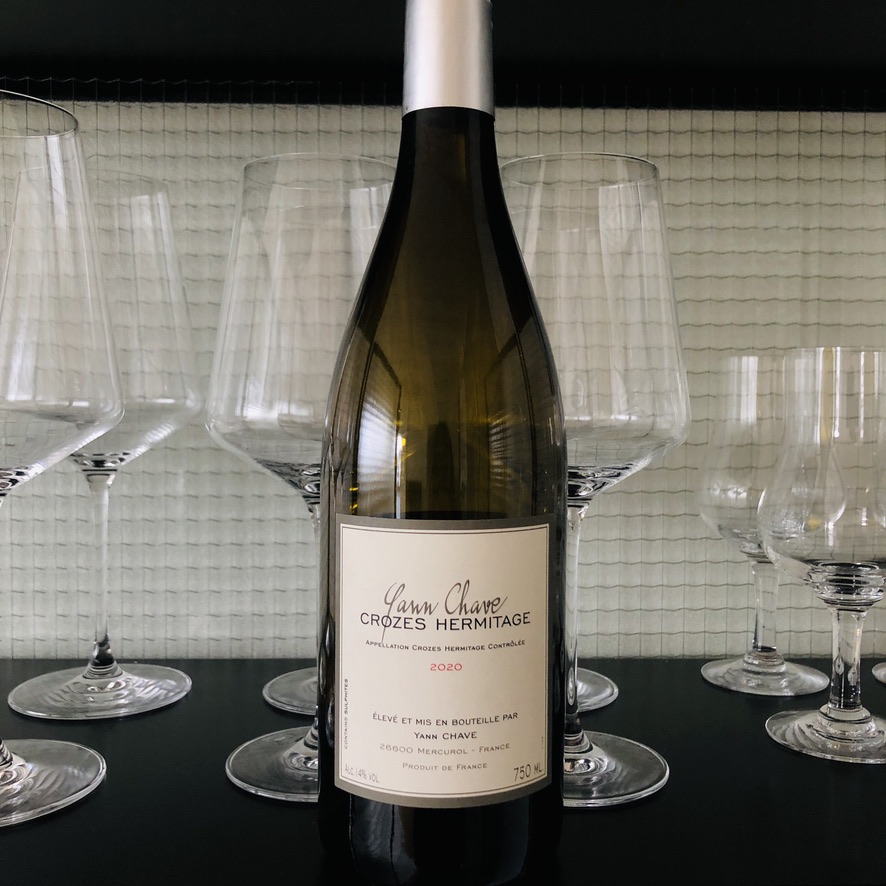
Crozes-Hermitage
Yann Chave, 2020
- Country and region: France, Rhone Valley, Crozes-Hermitage
- Producer: Yann Chave
- Blend: Syrah
- Alcohol content: 14%
- Tasting notes: plum, blackberry, white pepper, spice.
Keep reading about Syrah here.
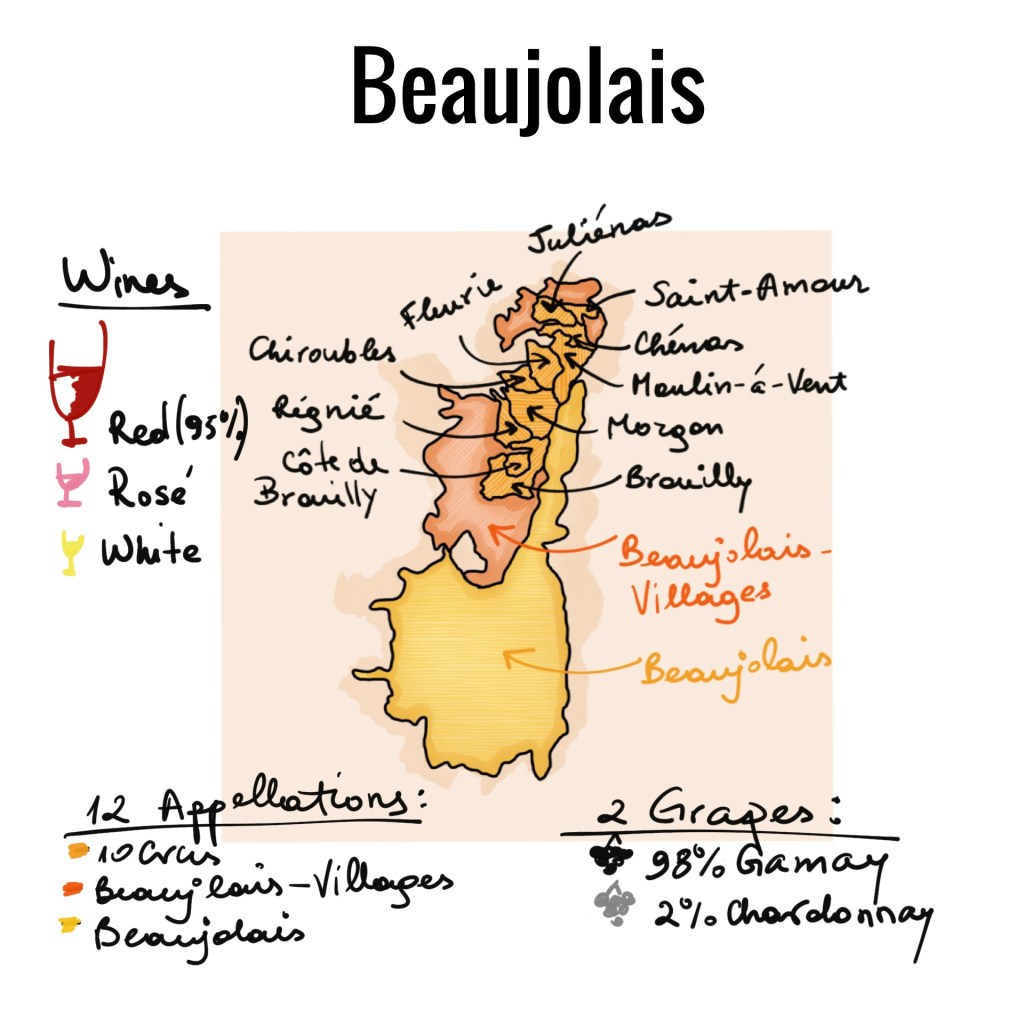
Beaujolais
Beaujolais consists of:
- 12 appellations: 10 crus, Beaujolais – Villages and Beaujolais
- 2 grapes: Gamay (98%) and Chardonnay (2%)
- Wines: red wine (95%), rose and white wines. Beaujolais Blanc is not very common but in recent years has gained a bit more popularity.
White Beaujolais is produced only in Beaujolais – Villages and Beaujolais AOC, made from Chardonnay, it tends to be full bodied, quite aromatic and floral with mineral notes.
Keep reading about wine here.
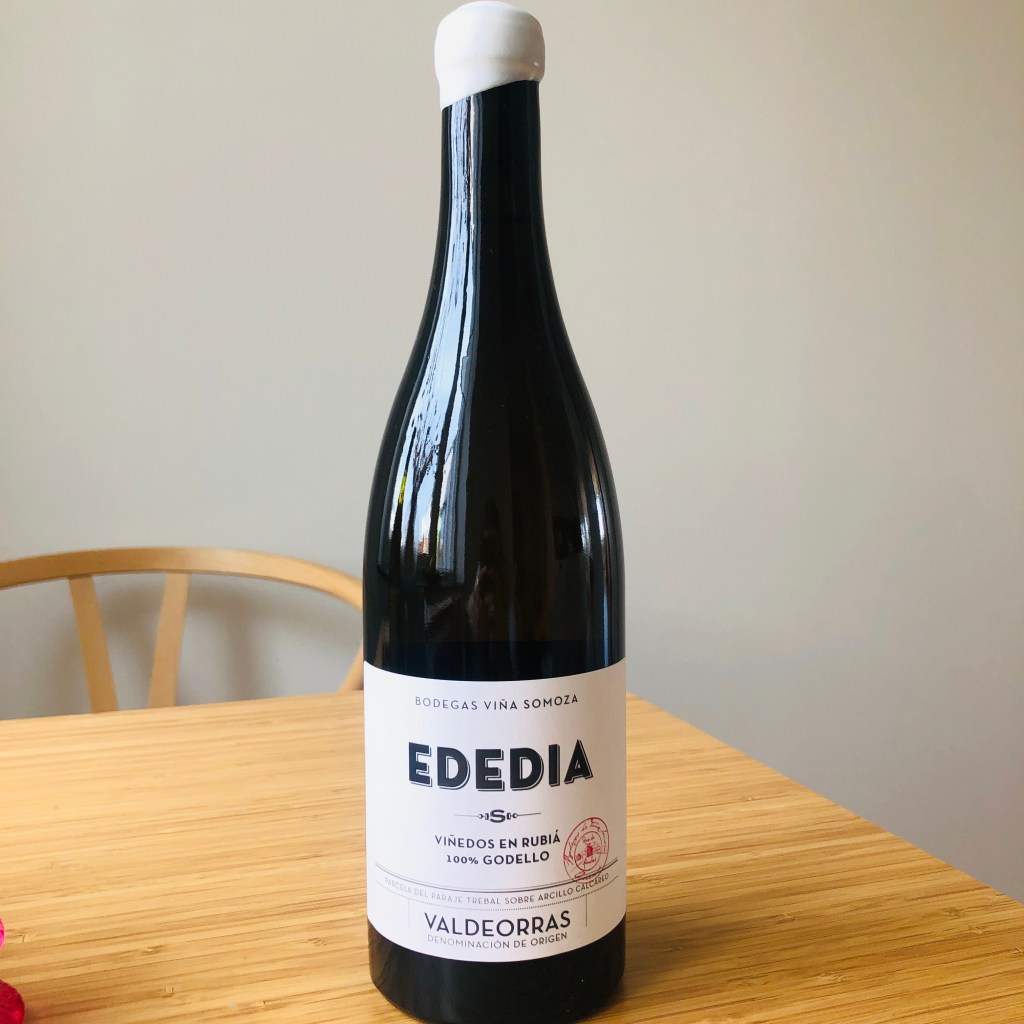
Ededia
Godello, 2020
- Country and region: Spain, Galicia, Valdeorras
- Producer: Viña Somoza
- Blend: Godello
- Alcohol content: 14%
- Tasting notes: Fruity, apple, citrus, well balanced
Keep reading about wine here.
Corks vs screw caps
Corks vs screw caps, who wins? It’s hard to say, there are pros and cons to both of them.
Corks are very Old world and let’s face it we’ve all raised an eyebrow at some point at the sight of a bottle of red with a screw cap. Having said that, quality wise – a cork does not necessarily mean better wine.
There are a lot of great quality wines with a screw cap, this is very common in the New world (New Zealand, Australia).
Keep reading about wine here.
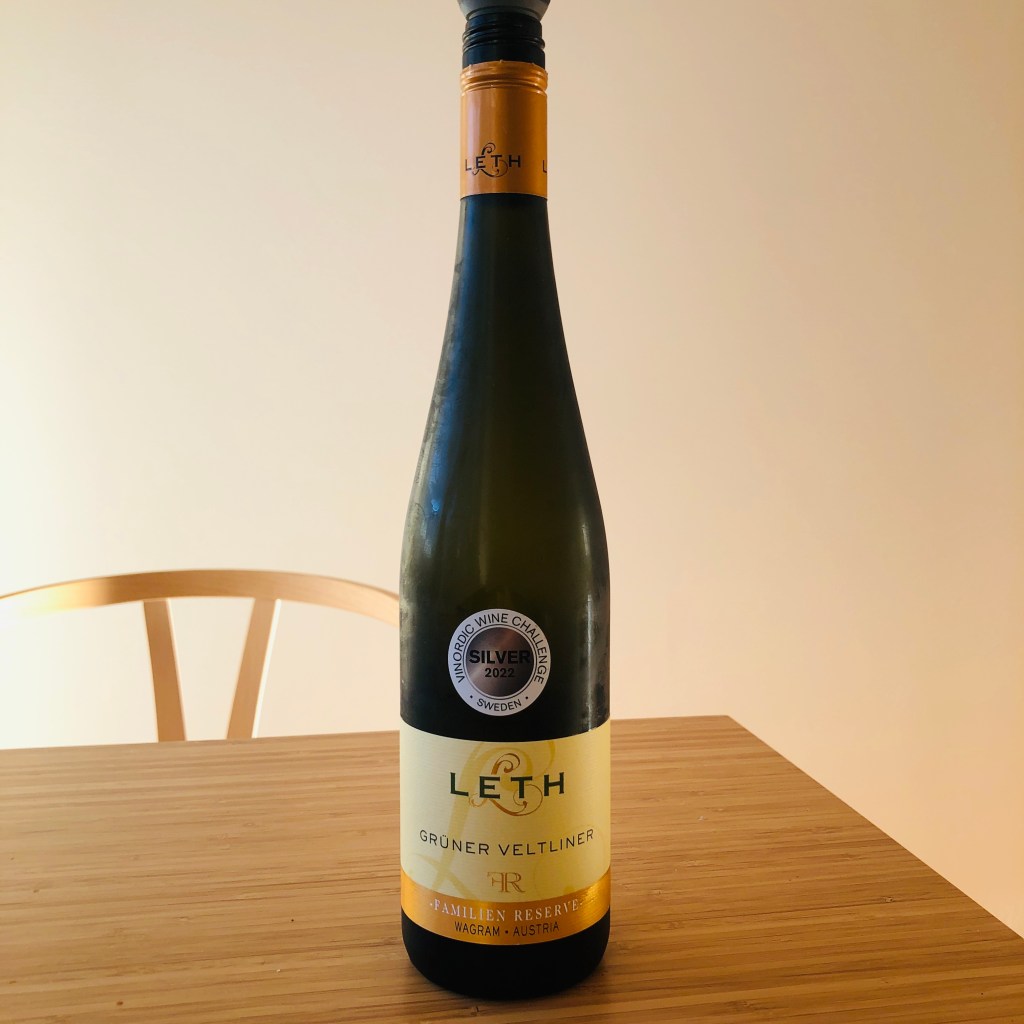
Leth
Grüner Veltliner Familien Reserve, 2021
- Country and region: Austria, Niederösterreich, Wagram
- Producer: Weingut Leth
- Blend: Grüner Veltliner
- Alcohol content: 13%
- Tasting notes: Fruity, white pepper, melon, pear, melon
Keep reading about wine here.
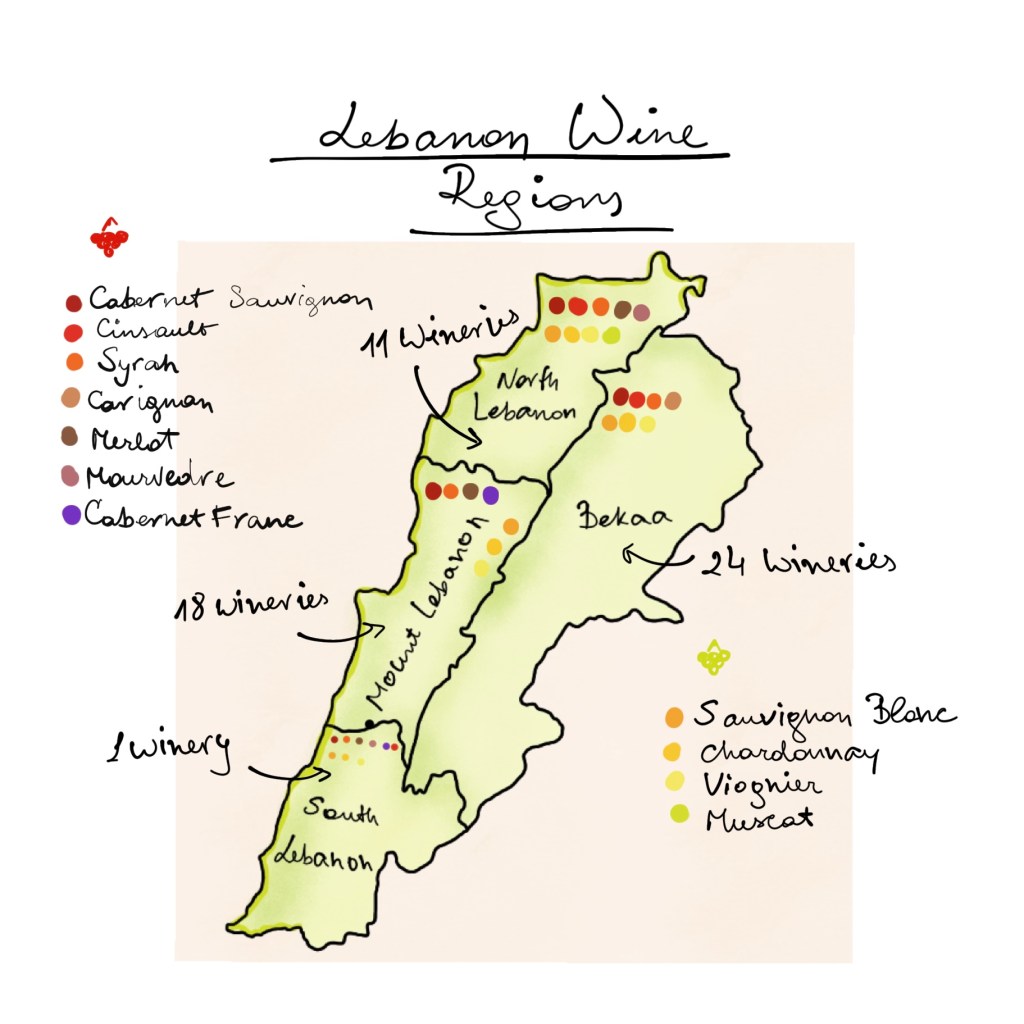
Labanese Wines
Lebanon’s wine production is small compared to other old world places however it has been gaining more popularity in recent years for its quality Bordeaux style wines.
With its moderate Mediterranean climate, it’s a great place for grapes such as:
- Red varieties: Cabernet Sauvignon, Merlot, Syrah, Cabernet Franc, Cinsault, Mourvedre, Carignan
- White varieties: Sauvignon Blanc, Chardonnay, Viognier, Muscat
Keep reading about wine here.

Pedra Cancela
2020
- Country and region: Portugal, Dão
- Producer: Lusovini
- Blend: Alfrocheiro, Touriga nacional
- Alcohol content: 13,5%
- Tasting notes: fruity, plum, blueberry, violet, soft tannins, medium body.
Explore Touriga Nacional here.
Grüner Veltliner
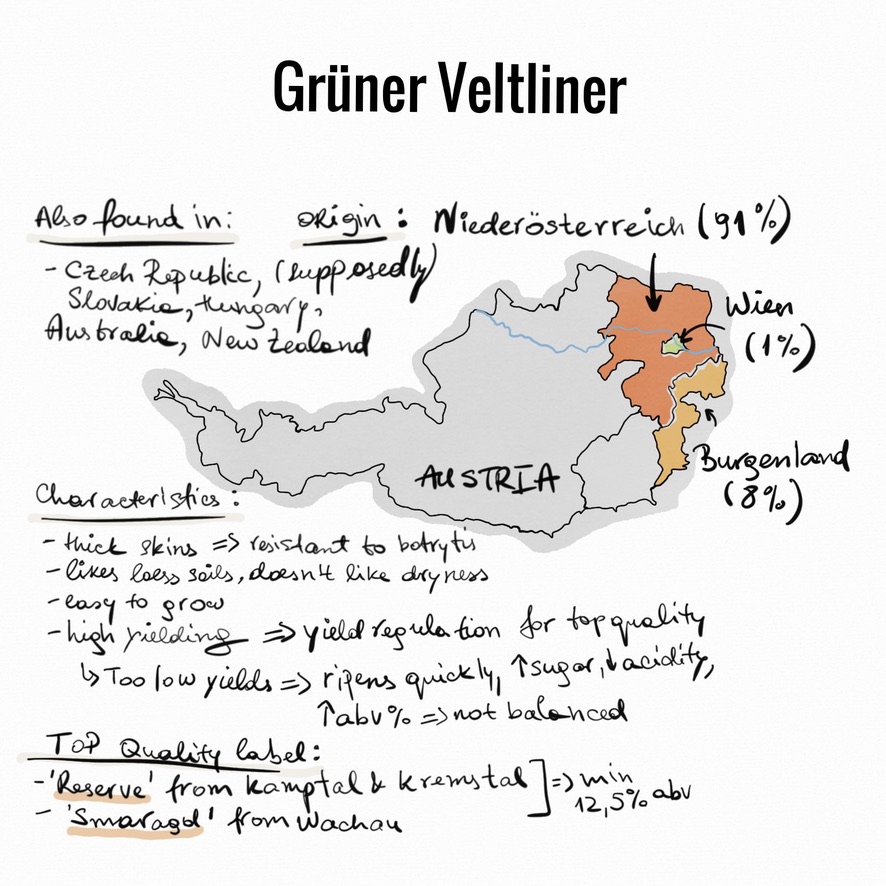
Grüner Veltliner – the grape that produces dry white wines with a name that is hard to pronounce (for some of us at least) and has a distinctive white pepper note.
Its origins are not 100% known but it most likely comes from Niederosterreich (lower Austria), Austria where it is still primarily grown today though other countries like Czech Republic, Slovakia, Hungary and some New world countries such as Australia, New Zealand have also started to grow small quantities.
Grüner Veltliner is relatively easy to grow and it’s high yielding which is why it was mainly used in everyday wines that were consumed young up until the 80s when the attention shifted towards quality wines made from Grüner Veltliner and then later in the 90s when it gained fame outside of Austria as well.
Because it’s such a high yielding grape, for quality wines it is prone to yield regulations, however too low yields can result in high sugar, low acidity, high alcohol level and wine that is not well balanced. When done right, Grüner Veltliner ages really well, it’s rich, complex with notes of nuts and lemon. Some of the best wines come from Kremstal and Kamptal labeled as ‘Reserve’ (meaning min 13% abs) and Wachau, labeled as ’Smaragd’ (min 12,5% abs).
Keep reading about wine here.
Touriga Nacional
Touriga Nacional – the Cabernet Sauvignon of Portugal and for a good reason!
In 2019, Bordeaux has decided to add Touriga Nacional together with 6 other grapes to the official list of grapes allowed in Bordeaux and Bordeaux Supérieur wines. For now these are allowed only in entry level Bordeaux and Bordeaux Supérieur labelled wines. The new grapes are allowed to be maximum 10% of the blend. Even so, this is a big step for an old region like Bordeaux and good news for Touriga Nacional.
Touriga Nacional is one of Portugal’s most popular grapes and is used to produce Port and dry red wine.
It is predominantly grown in Dão, where it also comes from, and the Duoro Valley. Touriga Nacional produces wines that are tannic, rich, mineral and have a dark color. These wines have a lot of floral aroma but at the same time can be very complex and have a good ageing potential.
Keep reading about wine here.

Derthona
La Colombera, 2020
- Country and region: Italy, Piemonte, Colli Tortonesi
- Producer: La Colombera
- Blend: Timorasso
- Alcohol content: 14%
- Tasting notes: fruity, apple, minerals, honey, melon
Explore more wines and grapes here.
Zibibbo
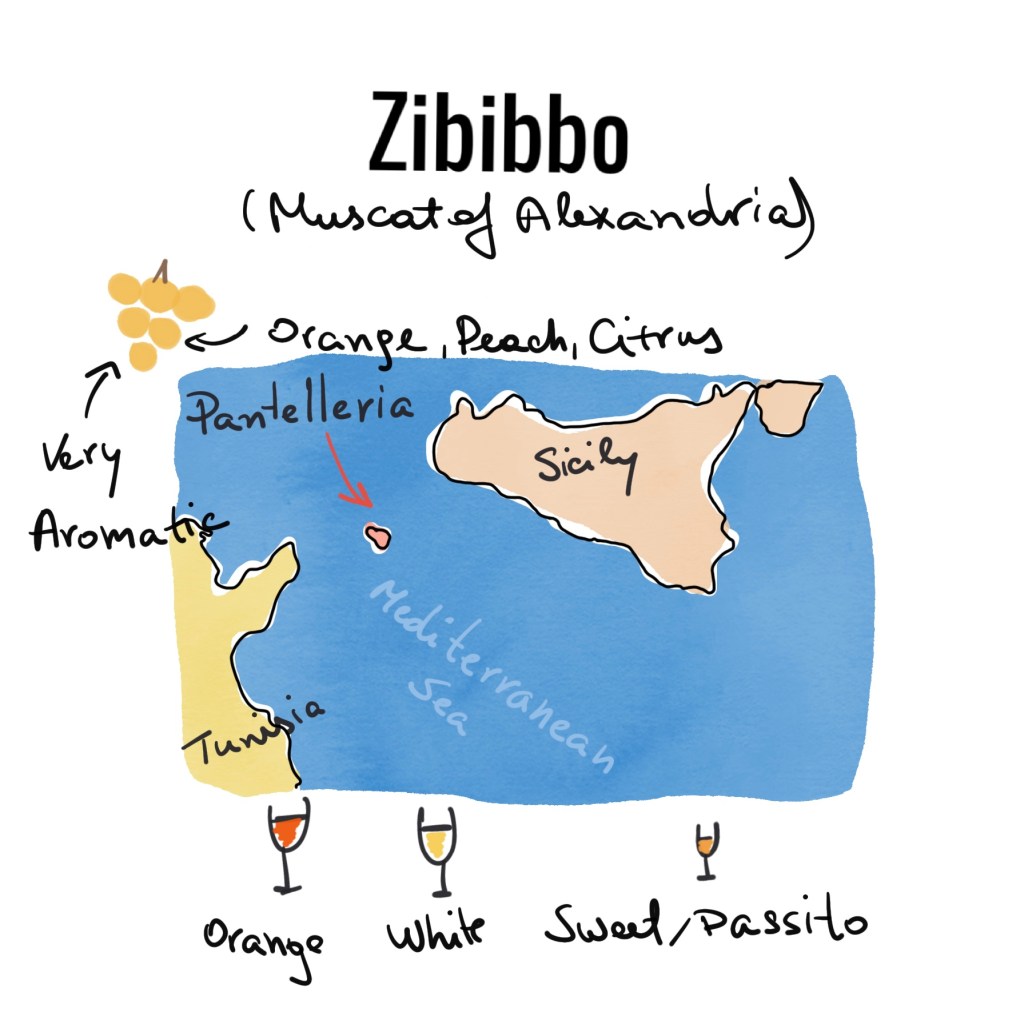
Zibibbo – also known as Muscat of Alexandria is an ancient grape originally from Egypt which made its way to Pantelleria, Sicily and the rest of the Mediterranean.
Today it is planted in France, Spain, Portugal, Australia, Greece, Chile, Peru. Zibibbo (means dry grape) as it is called in Italy, is used a lot in sweet wines such as the famous Passito di Pantelleria in Pantelleria where most of the Italian Zibibbo is produced, but also blended with other grapes or produced as varietal white wines and orange wines.
Zibibbo has a lot of aroma with notes of peach, orange, citrus, apricot. I had a Zibibbo orange wine a week ago and it was divine, full of aroma but also complexity. Try it if you can!
Keep reading about wine here.
Coste di moro
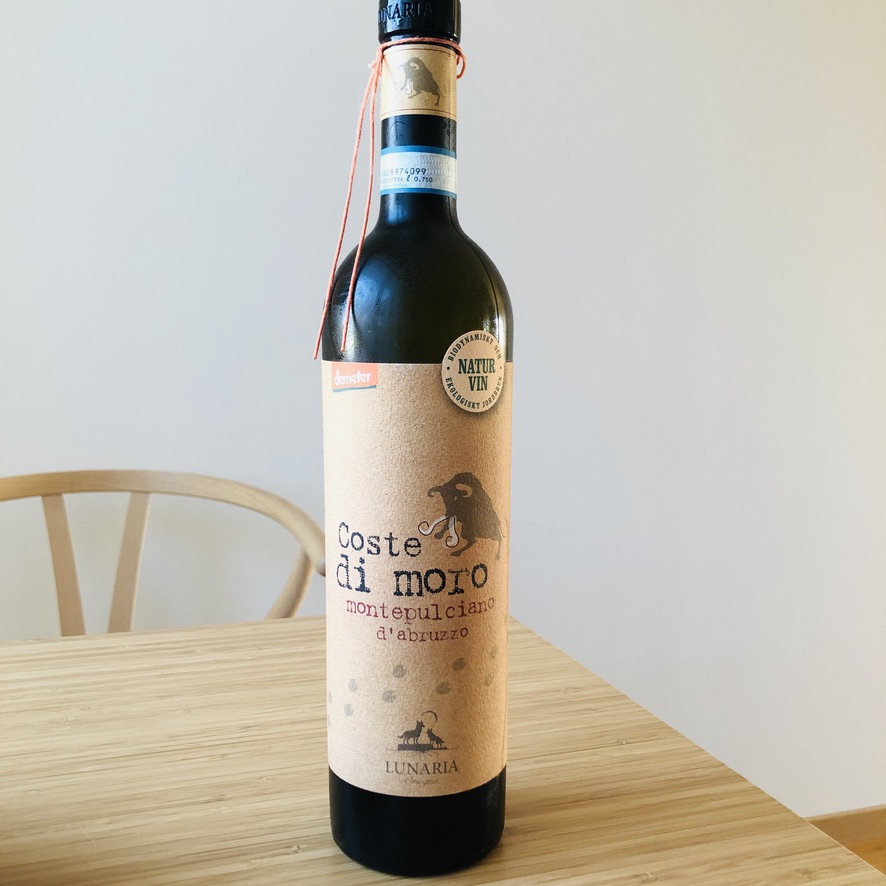
Montepulciano d`Abruzzo, 2018
- Country and region: Italy, Montepulciano d’Abruzzo
- Producer: Soc Coop Ag Olearia Vinicola Orsogna
- Blend: Montepulciano
- Alcohol content: 14%
- Tasting notes: fruity, blackberry, chocolate, vanilla, medium to full body, medium tannins
Explore more wines and grapes here.
Cabernet Franc
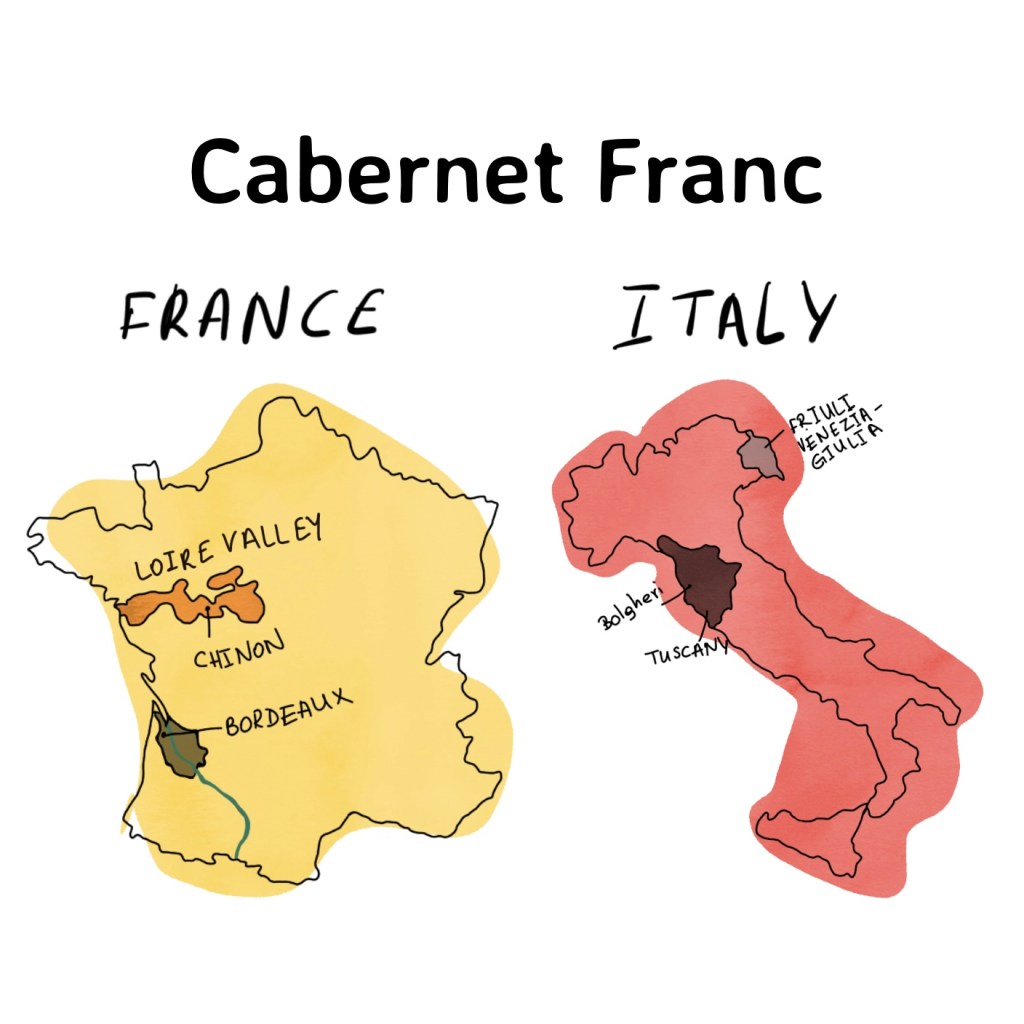
Cabernet Franc is one of Bordeaux’s blending grapes and a parent grape to Merlot and Cabernet Sauvignon.
In France it is mainly grown in Libournais (Bordeaux’s Right Bank) and is blended with Merlot in well known villages like Pomerol and Saint-Emilion. As a varietal wine it is primarily produced in the Loire Valley in Chinon and Bourgueil.
Outside of France, Cabernet Franc is also found in Italy especially in Friuli, Veneto and Tuscany.
In Tuscany it is part of the “Super Tuscan” blend in one of the best wines in the world – Sassicaia – which is a blend of Cabernet Sauvignon and Cabernet Franc. Sassicaia is an estate with history and one of the first one to produce “Super Tuscans”. It is located around the region of Bolgheri and has only recently gained its DOC name.
Keep reading about wine here.
 My cup of wine